
Tag Archives: Rotary Club of Madison

Korean Culture Night for Rotarians & Guests

submitted by Sharyn Alden; photos by Donna Beestman
Korean Night Photo 4  Korean Night Photo 5

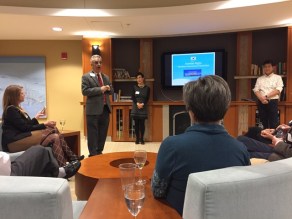
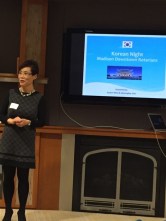
On March 22nd, Rotarians convened at the beautifully appointed Gathering Room at Nolen Shore Condos for “Korean Night,” a Cultural Awareness Fellowship event. Cocktails were served, complements of our hosts, Soyeon Shim, Dean of UW School of Human Ecology, and Christopher Choi, UW Professor, Biological Systems Engineering.

We were treated to a bountiful buffet of Korean dishes catered by Sol’s on the Square. The challenge was not to overload each plate as the choices were intriguing and many. When Soyeon gave us a preview of the menu, she noted table-top cooking is common in Korea. I heard diners rave about the sweet potato noodles, a seafood, pancake-like presentation with soy sauce, bean sprouts and spinach steamed with sesame oil, and a wonderful surprise –potato salad with cucumbers.

Not surprising, but equally inviting, was the dish that most of us knew at least by name –kimchi a traditional, somewhat spicy Korean dish of fermented vegetables, often including cabbage and daikon radish.

At the end of the meal, another surprise:  a plate full of delicious cream puffs, made by our event organizer, Majid Sarmadi, was the perfect touch!

The after dinner program was a thoughtful, insightful “storyboard” culled from about 80 slides highlighting Korean culture. It was presented by our hosts who met in the U.S., but each was born and raised in Korea.

We learned that South Korea, about 30 minutes by air from Japan, is surrounded by “big power.” Soyeon’s mother lives within about 20 miles from North Korea, but the hosts said people in South Korea, for the most part, go about their daily lives without constantly looking over their shoulder.

The country which is about the size of Indiana has the 11th largest economy in the world. “We don’t have any natural resources,” Soyeon said. “Our resources are human resources.”

She illustrated that by noting that 80 percent of high school grads go on to college. “The country is obsessed with education,” she said. But that level of stress comes with a price. Of the 35 member countries of the Organization for Economic Co-operation and Development (OECD), South Korea is No. 1 in suicides.

For those thinking of visiting South Korea, photos of the country’s beautiful landscape were stunning, magical and alluring.  First-time visitors might also see people bowing to each other. “This is one way we show respect for each other; in business and in personal relationships,” said Soyeon.

So much to learn in an evening, but it was a great start to discovering the intricacies of Korean culture.
US – Mexico Trade Relationship

Julian Adem 3 21 2018A

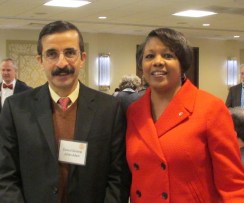
Consul General Julian Adem with Club President Donna Hurd

Consul General Julian Adem was instrumental in opening a new consulate in Milwaukee, which brings legal and related  services to Mexicans residing in Wisconsin. Consul Adem documented how strong the U.S. – Mexico relationship has become under the current NAFTA agreement. He warned that threats to this treaty could seriously damage the economies of both countries. Mexico has built a solid framework for macroeconomic stability in the past two decades and now has a $1.2 trillion economy, making it the 15th largest world economy. The country represents a $125 million consumer market, with 60% representing the middle class. Mexico is the 10th largest world exporter and 1st in Latin America. Its total exports are $374 billion, and its total imports are $387 billion.

Regarding the U.S. – Mexico trade relationship, Mexico is the U.S.’s third-largest trading partner. Since 1994, trade between the two countries has multiplied six-fold. $1.5 billion dollars in products are bilaterally traded each day. Mexico is the U.S.’s second-largest export market with exports reaching $231 billion in 2016. U.S. imports from Mexico were $294 billion in 2016. A large industry in Mexico is auto parts, primarily for light vehicles. Most of these are American-owned companies. Mexico also manufactures electronic and electrical equipment, home appliances and flat-screen TVs. Many of the goods made in Mexico have components made in the U.S. regarding energy, Mexico exports crude oil to the U.S. and imports gasoline.

Trade between Mexico and Wisconsin has also increased dramatically since 1994. Today, exports from Wisconsin exceed imports. Dairy products are a major import from Wisconsin, as are hogs and poultry. It is estimated that 96,000 Wisconsin jobs result from products sold to Mexico. In April, negotiations will intensify to develop NAFTA 2.0. It would be beneficial if an agreement could be reached by July before a new Mexican President is installed. NAFTA 2.0 should be designed to encourage competition, provide new opportunities and strengthen the energy sector. Challenges to NAFTA are expanding benefits to all states, streamlining regional integration and opening the energy sector to more opportunities.

If you missed our meeting this week, you can watch the video here.

The Complexities of the Immigrant Journey

submitted by Kevin Hoffman; photo by Mike Engelberger

HO7A6120An important theme of today’s meeting was the impact, experience and contributions of the immigrant on society and their journey from their birth home to making a new home in the United States.
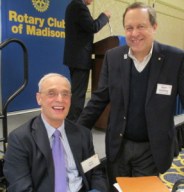
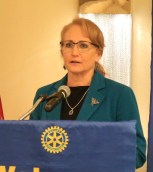
From the Swarsensky Humanitarian Service Award–named for Manfred Swarsensky, a German Jewish immigrant who fled Nazi Germany in 1939 — awarded to Dr. Suresh Chandra, an immigrant from India, for his work locally and internationally with Combat Blindness International to our speaker today, Shiva Bidar-Sielaff, who is an immigrant from Iran by way of Spain.  Her family fled Iran during the Revolution for safety, and she came to the United States in 1991 to attend graduate school.  She is now a naturalized citizen and Chief Diversity Officer at UW Health.

She painted the immigrant experience as shaped by loss and complexity – loss of home, family, job, culture, language, community, the familiar, etc.  She also reinforced the positive outlook of the immigrant.  The quest for opportunity, choosing goodness over evil, the desire for one’s children to do better than the parent, the strengths of cultural integration into society (as opposed to the Euro-centric notion of melting pot assimilation), the principle of building bridges instead of walls, and developing extended family-like connections within the community.

Addressing questions posed about the immigration issues of our current time, Bidar-Sielaff felt that we are in a time of persecution of the immigrant.  She urged us to remember our Rotary Four Way Test and to advocate for common values, and good thoughts, words and deeds.  She encouraged us to be allies, and be present with the immigrant community when there are issues.  It is less easy for policymakers to dismiss concerns when there is broad-based support from all manner of skin color, culture and station.  And, of course, vote!

If you missed our meeting this week, you can watch the video here.

Reflections on Changes in Wisconsin Government

submitted by Bill Haight; photo by Donna Beestman

Todd Berry 3 7 2018.

Guest speaker Todd Berry (left) with Rotarian Steve Goldberg

Todd Berry, retired head of the nonpartisan Wisconsin Taxpayers Alliance, reflected on the changes he’s seen in Wisconsin government over the past 40 years.

The observable changes Berry noted are toward more short-term thinking, ideological polarization, gridlock and incivility.

The “old” was characterized by “citizen legislators,” who most likely had spent some time in business, other professions or parenting. The “new” legislator has likely selected a career path toward politics: a political science degree, internship and party activity.

Wisconsin is one of about a dozen states, and perhaps the smallest, with a full-time, professional legislature. These career politicians have a tendency to have their eye on their next election, rather than long-term strategy, bipartisan cooperation or the average voter. They are more beholden to party leaders who control committee appointments, influence allocation of special-interest campaign donations and otherwise affect the political fate of legislators.

Redistricting and Wisconsin’s primary election structure also tend to make a politician focus on special-interest voters at the expense of the average voter who likely doesn’t vote in the primary anyway. Making partisan primaries into all-candidate, cross-party primaries would be a step toward giving voters a broader, less predictable choice, said Berry.  In a recent year, fully half the legislators elected faced little or no real opposition.

In order to attract more non-career legislators, Berry threw out the “crazy” idea of tripling the size of the legislature. This would mean smaller districts, and less susceptibility to special influence funding. Technology could enable part-time legislators to communicate and vote without having to spend lengthy time in Madison, away from their constituents.

An audience member asked: Might the incoming generation of millennials resist the trend toward excessive party-boss influence? Unfortunately, noted Berry, while the average age of legislators dipped in the 70s and 80s, it has been increasing in recent years.

If you missed your meeting this week, you can watch the video here.

New Research in Treating Childhood Cancer

submitted by Rich Leffler; photo by Mary Ellen O’Brien

Ken DeSantes 2 28 2018

Ken Desantes pictured here with Club President Donna Hurd

Dr. Ken DeSantes presented us with a hopeful account about the modern treatments for a dreadful, heartbreaking disease: childhood leukemia. Dr. DeSantes is Clinical Director of the Pediatric Hematology/Oncology program, and Director of the Hematopoietic Stem Cell Transplant program, at the American Family Children’s Hospital. So he knows of what he speaks.

Childhood cancer is not common, but even so, it is the leading cause of death for children and adolescents. Dramatic progress in treatment has been made in the last 70 years in treatment. In 1947 doctors (were they called oncologists then?) began to use a single drug that delayed the progress of Acute Lymphoblasic Leukemia. About 10 percent were cured. Today, using more sophisticated treatments, the figure is 80 to 85 percent. Yet that still leaves 15 to 20 percent who die. Current chemo treatment is rough and sometimes toxic and can take several years. Now, researchers at the AFCH, like Dr. DeSantes and Dr. Paul Sondel, are attacking leukemia with immunotherapy, which uses the body’s own T-Cells to kill cancer cells. They are using truly incredible, sci-fi techniques like inserting specialized DNA into cells that will enable T-Cells to overcome the cancer cells’ defenses. They can create an army of T-Cells that can kill leukemia cells. This “CAR Therapy” has now been approved to treat not just relapsed cancers, but newly diagnosed cases.

Another cancer, Neuroblastoma, has a bad prognosis. But a new technique that combines a genetically redesigned antibody with the body’s natural killer cells has shown a 20 percent better result than standard treatments. This MIBG therapy, which allows radiation to be taken up only by cancer cells, is still not curative, but work is being done by Dr. Sondel to improve the effectiveness of the treatment: a combination of immuno- and radiation therapy. Clinical trials are going on here.

Other cancers are being attacked using Haploid, half-matched stem-cell transplants. Techniques allow removing T-Cells that attack the transplants, leaving only the T-Cells that attack the cancer. In one recent Neuroblastoma case, a boy aged 6 was treated successfully, only to have the cancer return at age 11. Relapsed cancer cases are bad. But using the Haploid treatment, this boy has been in complete remission for two years.

In answer to a question, Dr. DeSantes noted that a very important amount of their funding for research came from relatively small gifts. And one questioner violated Club policy by making a statement: the staff members at Ronald McDonald House consider Dr. DeSantes and Dr. Sondel to be heroes. True enough.

If you missed our meeting this week, you can watch the video here.

From Washington to Wisconsin

submitted by Mary Borland; photo by Mike Engelberger

Jo Handelsman 2 21 2018During the February 21 Rotary meeting, we heard from Dr. Jo Handelsman. She spoke to us about her time serving in President Obama’s administration as the Associate Director for Science in the White House Office of Science and Technology Policy (OSTP) in Washington D.C. and her return to Madison to become the Director of the Wisconsin Institute for Discovery at UW-Madison. In Washington D.C., her area included the following:
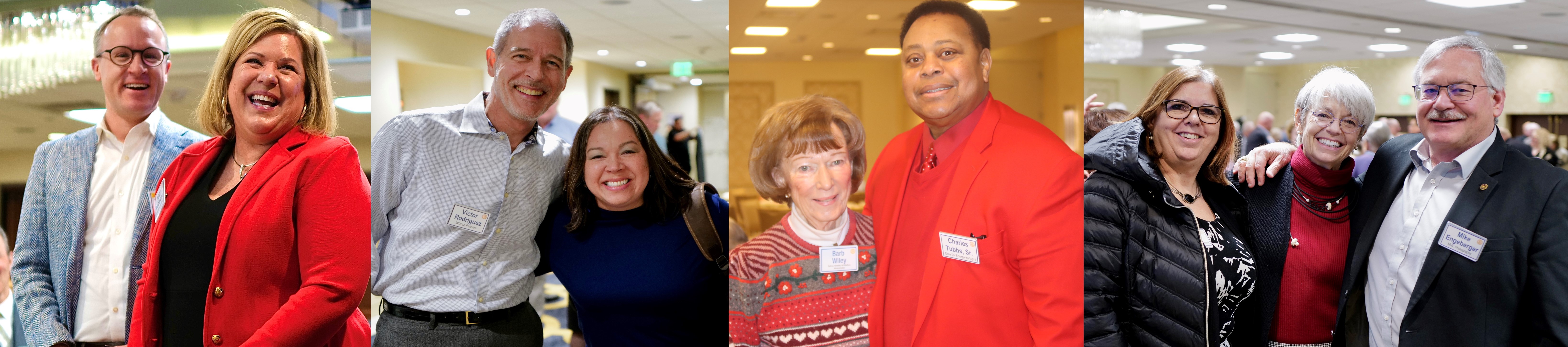
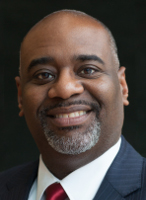
  • Office of Science & Technology Policy
  • Science Division
  • Levers for Change
  • Initiatives, most notably the “Precision Medicine Initiative”

She advised President Obama about science, which he is passionate about; managed science and technology in crises, the Ebola and Zika crises occurred in her 8 years in D.C.; managed her budget; scanned for gaps and opportunities; championed new ideas; increased visibility of science and technology; led committees/task forces (26 agencies were on the Ebola task force!); and recommended candidates for the Presidential Medals for Science and Technology.

Dr. Handelsman stated how fortunate she was to work for and with John Holdren, OSTP Director, and President Obama, given both of them digest information quickly and are able to articulate it in summary form extremely well. She also shared that diversity in the agency was extremely important for better outcomes.

The levers utilized to accomplish advancements included:

  • Executive orders
  • National monuments
  • Proclamations
  • Presidential Messages
  • Presidential Speeches
  • Event Commitments
  • Federal Agencies
  • Formation of Commissions
  • Compelling Arguments + Stature of White House

Regarding the Precision Medicine Initiative: the 21st Cures legislation contained $4.8 billion for this initiative, had bipartisan support and passed both houses in Dec. 2016.

Now at the WI Institute for Discovery (WID), she is able to continue many things she worked on in the White House.  WID is currently experimenting with new ways to catalyze interdisciplinary research; generate new research collaborations across campus; and build connections with the State of WI. It is exciting to put the word out to the entire campus to obtain ideas and input on particular issues – it elevates creativity and collaboration!

WID has a “Small World Initiative” course, which is a fusion of research and education to crowdsource antibiotic research in the hopes of discovering more antibiotics. Across the world, 10K students are taking this course and providing research to solve global problems.  This includes collecting soil samples in support of developing new antibiotics. Dr. Handelsman encourages us all to visit the WID.

Our thanks to Dr. Jo Handelslman for her presentation and to Mary Borland for preparing this review article. If you missed our meeting this week, you can watch the video here.