
–submitted by Kevin Hoffman; photo by Jeff Smith

Washington Bureau Chief Craig Gilbert (pictured here at left with Rotarian Stan Kitson) of the Milwaukee Journal Sentinel presented the political climate for the 2016 election. In a word, the Presidential and Congressional elections are more polarized than any in recent history.
With the two major-party candidates suffering high disapproval ratings, there are divisions both between the parties but also within each party as supporters struggle to reconcile party affiliation with distaste for their respective candidate. For example, Republican nominee Donald Trump should enjoy a significant advantage in Waukesha County. Traditionally, Republican nominees have enjoyed well over 50% support in polls but Trump is only at 41% with 15% undecided. Democratic nominee Hillary Clinton is doing well in solidly Democratic Dane County but she struggles to attract the same level of support as President Obama did in 2012.
Also, in Wisconsin there is a significant urban-rural divide that has implications for the general election. Trump enjoys support in the rural northwest of the state but in population centers such as the southeast, with more reliable and higher voter turnout, he is below the level of support Romney captured in 2012. Urban Republicans have been slower to coalesce around their nominee resulting in a large number of undecideds.
So, the election will come down to how effectively each candidate can mobilize their “base” areas of support in spite of voter misgivings. Trump will need to convince the undecideds in traditionally Republican strongholds to vote for him rather than a third-party candidate, cross over and vote for Clinton, or not vote. Clinton has stronger support within Democratic areas but also needs to convince Sanders supporters, the Obama coalition from 2012, and Republicans turned off by Trump to vote for her.
If you missed our meeting this week, watch the video here.

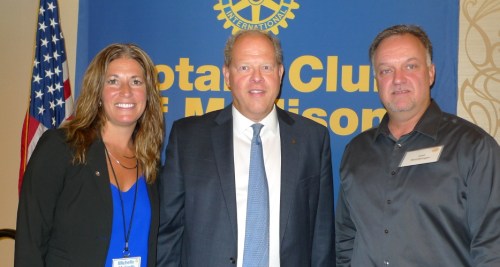
 Madison Metropolitan School District Superintendent Jen Cheatham (pictured at left with Club President Michelle McGrath) addressed the Rotary Club of Madison on September 7th. Her third Rotary address focused on how the Madison public schools are narrowing the racial achievement gap and meeting the financial challenges of the future.
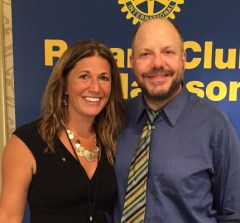 UW Anthropology Professor John Hawks (pictured here with Club President Michelle McGrath) told of an astounding find of early hominid bones in a cave in South Africa. He worked with Lee Berger, with National Geographic, whom he described as a foremost scholar in human evolution. With a strong commitment to educating the public about science, the National Geographic and University of Wisconsin media have covered the work since the beginning in 2013, including the amazing moment when bones were detected in the cave.
 This week, at the Inn on the Park, club members and guests heard how and why craft beer has become so popular. Guest speaker Robin Shepard provided a brief description of the historical context of brewing in Wisconsin followed by an overview of the trends in Wisconsin’s current craft brewing industry. The biggest trend being about flavor trends.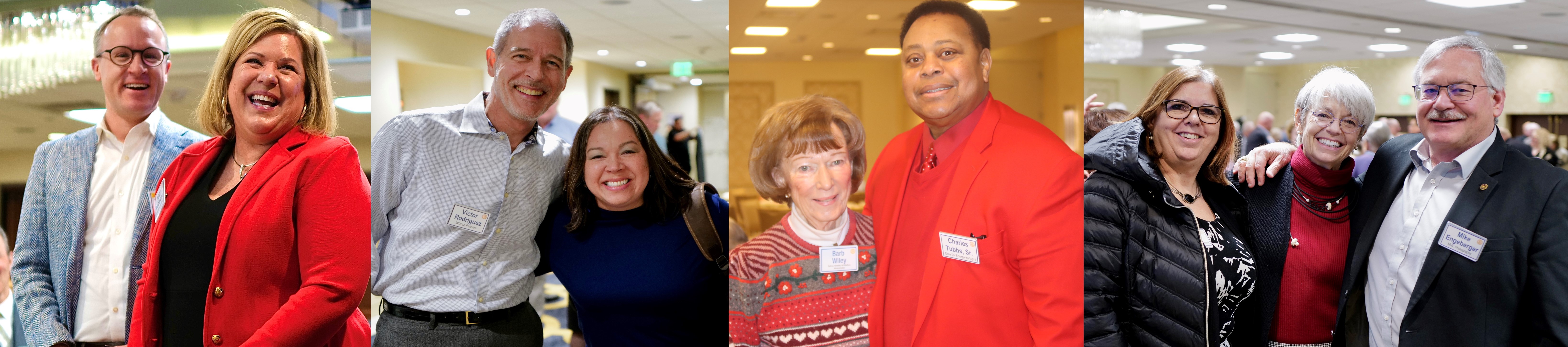

 Rotary Club of Madison, Wisconsin