
submitted by Jessika Kasten
 This week, UW-Madison School of Journalism Professor Michael Wagner spoke to the Downtown Rotarians on Pandemic Voting: Information, Geography and Polarization in the 2020 Elections. The J-School has done a lot of research on the impacts of media and voting and has tracked the polarization of Wisconsin voters since 1996. Since that time, we’ve seen a decline in local newspapers and local news reporting, a rise in talk radio and social media, as well as a stark rise in the amount of political advertising in our state. The School of Journalism has done a lot of research on the impact of changing information channels and has found that the broader your media diet, the more likely you are to vote outside of party lines. As an example, those who viewed a wide range of information sources were 50% more likely to split-ticket vote in an election (i.e., choose candidates from more than one party on the same ballot). Those who consumed a narrower range of media had nearly no likelihood of splitting a ticket.
The researchers also wanted to compare whether Wisconsinites were move divided on politics from other swing states like North Carolina, Pennsylvania, Michigan and Ohio. The results were true that Wisconsinites’ attitudes around politics and social trust were more divided than other swing states. One researcher felt that those in rural and suburban areas of Wisconsin had long felt neglected and under-represented. Governor Walker’s campaign spoke to those people by denouncing Madison and Milwaukee influences, which could have had an impact in the attitudes of those outside the more metropolitan areas.
Ultimately, Professor Wagner summarized his talk by saying that Wisconsin remains divided due to partisanship, geography and the information we consume. He also made clear that these divides fracture our political and personal relationships in many cases. The good news is that a varied and wide media diet can influence these views and offer opportunities to work across party lines.
If you missed our meeting this week, you can watch the video here.
 Dr. Jesslyn Hollar is an Edgewood College Professor, and she teaches education courses, “a teacher educator.” She is well qualified to talk about engaging kids in learning amidst COVID-19 school closures as she is the mother of a 6-year-old and a 2-year-old. Her roles of parent and teacher educator are no longer separate but overlapping.
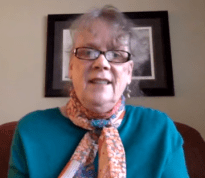 ellow Rotarian Lynn Brady, who is President and CEO of Journey Mental Health Center, shared her insights on “Dealing with Mental Health in the Time of the Coronavirus, a Unique National Emergency!” Brady’s presentation to the club through a virtual meeting platform on Wednesday, April 15, 2020, was an immediate reminder of the significant disruption that all of us are facing in our daily routines. Brady reflected that we are social creatures, and so this required isolation is inevitably going to have an impact. We feel uncertainty about when things will return to normal. In Brady’s work, she says that they are not currently seeing a lot of calls. Rather, people are asking for tips on dealing with stress; how to talk to children about the issue; and how they might reach out in the future to a mental health professional. The mental health professionals that she works with also need a chance to talk through the issues.
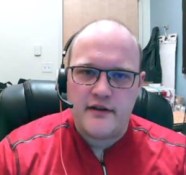 Rotarians heard online April 8 from Benjamin Eithun how Madison is part of several networks to plan for medical emergencies. Eithun is Director of Pediatric Trauma, Surgery, Injury Prevention and Child Protection at American Family Children’s Hospital.
 Rotary Club of Madison, Wisconsin