Tag Archives: Madison WI

A “Different” Wine Tasting on Feb 1

–submitted by Mike Wilson; photo by Pete Christianson 
IMG_2128

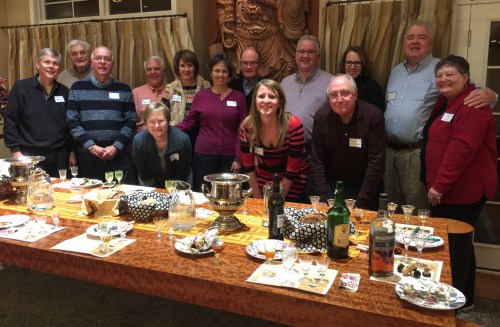
The Wine Fellowship met at Mike and Patty Wilson’s for a “different” tasting.  We tried fortified wines and added three Single Malt Scotches to show the effect of a REAL aftertaste.  I love the aftertaste of wine and I score it very highly on my rating assessment of individual wines.  A 20-second aftertaste is superb in wine, but Scotches and Cognacs have aftertastes that last all night, and welcome you the next morning.

We first tried Sherries from that small triangle in Southern Spain right at the Straights of Gibraltar. These fortified wines were at their popularity peak in the 70’s when I left NZ and I had often drunk Tio Pepe and Harveys Bristol Cream – bone dry and sweet examples – aperitif and dessert wines.  This time we tried the Tio Pepe Fino and a Lustau Oloroso – the latter a more complex wine.  The latter was the preferred wine  but I warned everyone the Fino is great as an aperitif.  These wines are aged in the Solera system

Next we tried two Ports – the nearest thing to usual dinner wines among those tasted.  Here we tried two styles that are the best bargains – a Kopke Tawny 10 year old port and an unfiltered Late Bottled Vintage (LBV) from Quinta do Noval.  The Kopke is the longest family run Porto in Portugal dating to 1638.  Both were very good and were well liked by most tasters.

These 4 wines averaged about $25 and are all available from Steve’s on University.

Next I tried to make a case for Marsala not being relegated to a cooking wine.  Here there was an interesting tale about this old wine being confined to the Trapini region near the NW corner of Sicily.  When Englishman John Woodhouse in 1773 was forced by a storm to land in Marsala, he fell in love with the wine and recognized the similarity to the popular Port in England, and decided not to collect the load he was to pickup in Sicily and rather filled his ship with Marsala. He came back in 1796 and set up a winery.  In 1806 he was followed by fellow Englishman Benjamin Ingham who even built the first Anglican Church (Church of England), the only church of the Diocese of Europe, across the road from his mansion. These wines use the Perpetuum system – similar in concept to the Sherry Solera system.  We tried a Florio Dry wine (the oldest Sicilian producer of Marsala -established 1833) fino (Aged 1 year), and Marco de Bartoli Vigna La Miccia 5 year riserva which is medium-dry,.  These two represent the range of Sicilian Marsala’s – the first a “post-English” and oldest Sicilian Marsala winery and the latest a very serious wine maker Marco de Bartoli producing what he describes as a “pre-English” Marsala – predating Woodhouse’s arrival.  What drama!  These wines were not favorites of the tasters but Mike had fun reliving his trip to Palermo where he and Patty stayed in the Bingham residence, now the Grand Hotel de Palmes in Palermo, Sicily.

Next we tried two fortified wines being located on distant islands.  First we tried a Madeira from the island of the same name some 600 miles from the home land Portugal, and an Isle di Pantelleria closer to Tunis than Sicily.

The Madeira Islands were discovered in 1419 by Portugese explorers and became the first requisitioning station for travelers/explorers to India, the America’s, and the East Indies.  This was likely the first fortified wine as such, and there the best wine was that that had traveled the “round trip” – vino do roda – to and from the “Hetherlands”.  To simplify production the Madeirans invented the cheaper and more efficient “hothouse” system where the stored wine in large rooms heated by the sun with the wine in large barrels raised on trestles.  They are stored for 20-100 years – and many old wines are still for sale. I personally liked this very much and recounted how a 100 year old sample was brought to a Bring Your Own Wine Rotary Wine Fellowship once.

The other Island DOC is the Moscato/Passito from Isle di Pantelleria. This is made by the new Powerhouse Marco di Bartoli who is restoring Marsala’s name.  He also started this Passito production on the Island, now followed by other major Marsala producers.  This wine is a Passito (slightly raisanated) where the heating of the grapes is done in the field where the grapes are handpicked and left in fields between natural rock walls and allowed to dry out and concentrate sugar and flavors for two weeks before the rest of the grape crop is picked then the Passito is added. This is like brother-sister Italian Passito wines of Valpolicella in the Veneto, and the Montefalco in Umbria.

Last we tried Single malt Scotches.  I selected three of the six regions where Single malts are made.  First we had Auchhentoshen Three Wood from the Lowlands (less than 10 producers) and this example I think of as one of the mildest Malts. Then we tried The Glenlivet as the first legal distillary (1824) after the Excise Act of 1823.  This distillery sued other producers in the valley (Glen) of the Livet river (hence Glenlivet), and the judge determined they could call themselves “The Glenlivit” and the others could include the Glen Livet component as they were also in the Glen of the Livet river – a real Solomon decision that The GlenLivet has exploited since.  This is said to be a light delicate Malt.  Last we tried one of the few Isle of Islay Malts – Laphroaig.  A Smoky blockbuster that was a shock to most of the wine imbibers tastebuds.  A good experience of a Great Long Smoky Aftertaste.

Breads, cheeses, olives, almonds and chocolate covered strawberries were provided.


Brexit–What Next?

–submitted bu Linn Roth; photo by Margaret Murphy

Copelovitch 1 31 2018

From left: Ron Luskin, Mark Copelovitch and Club President Donna Hurd

At Wednesday’s meeting, Professor Mark Copelovitch gave a highly informative presentation on the history and status of the UK’s planned exit (Brexit) from the European Union (EU) and its potential impact on trans-Atlantic relations.  Historically, the UK has had a tortuous relationship with continental Europe, but, after World War II, Churchill became the greatest champion of European unification.  Despite ongoing domestic ambivalence, the UK finally applied for EU membership, and was accepted in 1973, although the UK chose to maintain its own monetary system.   Subsequently, the EU continued its membership and economic growth for approximately 40 years.

However, the decade from 2007 – 2017 changed all that.  The global recession spawned the growth of isolationism, nativism, and right-wing political factions in much of the world, including the UK and the US.  Relationships with NATO and on-going trade partnerships have been challenged by President Trump, and some of the same economic, regional, and political schisms occurring in the US are taking place in the UK and other European nations.  In a political miscalculation originally intended to shore up his base and undercut competing factions, Prime Minister David Cameron called for a public referendum on whether the UK should stay in or withdraw from the UK.  On June 23, 2016, 72% of UK citizens voted in the referendum, and while the margin for exodus was small (52% to 48%), the consequences of the UK’s withdrawal could be monumental.

For example, the UK was strongly split on Brexit, with Scotland and Northern Ireland voting to stay and with London supporting the EU by an 80%/20% margin.  So potentially, these two countries could try to leave the UK, and many major financial institutions in London are looking to relocate in Europe.  Other European countries, such as Spain, are suffering similar crises, and there is a growing movement within the EU to establish trade and defense relationships apart from the US.  As Professor Copelovitch emphasized, the history of isolationism and protectionism is not a sound or peaceful one, so the US must be wary of exiting its leadership position on the world’s stage.  Since there is no actual legal requirement for the UK to exit the EU in March 2019, there is still the potential for a reversal.  Nevertheless, Brexit seems to serve as a warning signal for all nations to recognize that globalization is here to stay and can only be reversed at our own peril.


The Future is in the Hands of Young Women

–submitted by Linda Baldwin; photo by Mike Engelberger

Tory Miller 1 24 2018Tory Miller, Madison’s most famous chef, loves rice crispy bars, started cooking as a child in his grandparents’ café in Racine and beat Iron Chef Bobby Flay in the Iron Chef Showdown last month.  What’s next?

Miller, co-owner and chef of some of Madison’s best restaurants (L’Etoile, Graze, Estrellon and Sujeo) sees a bright future for Madison’s food scene in the hands of young chefs who have a passion for local food and a willingness to work with the community.  He notes that a national magazine naming Madison the best foodie scene in the Midwest would certainly help raise the city’s culinary profile.

Raised in Racine, Miller went off to New York to study at the French Culinary Institute.  While stumbling at first, he found his way into the kitchens of many of the country’s best chefs.  Wanting to be closer to the food producers, he came back to Wisconsin and into Odessa Piper’s L’Etoile kitchen.  And so they say, the rest is history.  A James Beard Midwest Best Chef Award winner, Miller credits Piper for showing him that all people in the kitchen, in the house and guests should be respected and treated fairly.  In the past, women and folks on the lower rungs of the kitchen were not treated well, but today these folks are now running restaurants, leading chefs and a more respected part of the community.  Miller has also been instrumental in the start up Madison Area Chef’s Network (MASN) helping the community with food needs and helping each other to be more successful in an industry where cooperation was not the norm in the past.

So, what about Iron Chef Bobby Flay?   “The meat of it”, Miller laughs, “is that Bobby Flay is not super nice. Being on the show was nerve wracking, but I was happy with the way it turned out.  I’m weird and quirky, but we always want to be the best!”

If you missed our meeting this week, you can watch the video here.

Admissions and Recruitment at UW-Madison—How Does It Really Work?

–submitted by Carol Toussaint; photo by Valerie Renk

DSC00741As Director of Undergraduate Admissions and Recruitment at the University of Wisconsin-Madison, Andre Phillips has a key role in determining who will or will not become a student.  He described both the opportunities and obstacles to his Rotary audience Wednesday emphasizing that he works with a team in the Division of Enrollment Management in the Office of the Provost.  Several from this team were guests at the program.  Phillips came to Madison in 2011 after extensive experience in similar positions at the University of Chicago.
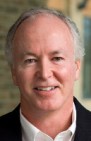
Phillips emphasized that he works with a “Wisconsin First” policy as directed by the Board of Regents of the UW System.  “Everything starts with Wisconsin” is the way to think about the job.  Phillips said that it is a big job which starts by being in touch with high schools in the state.  Assuring the audience that the team reads everything submitted with the application, he went through some of the requirements.  Acknowledging that high schools offer a variety of opportunities, he noted that they look to see what a student has done with what was offered.  The importance of organizing thoughts in response to questions asked on the application reinforced the value of writing with clarity.

“We want to know why the applicant wants the UW-Madison but we also need to learn why some of our top students aren’t applying here” was the opening for presenting information for what Phillips referred to as “Wisconsin Prime”.  Saying “we need to recruit more of our own” he described work that is being done starting with high school sophomores through visits to individual schools and bringing these students to the UW.   Outreach is also focused on first generation multi-cultural students.

Rotarians raised questions as to issues of affordability.  Phillips said he was not free to discuss some new plans we’d hear about fairly soon.  In fact, we were sworn to secrecy but without learning any details!

As the program concluded a number of Rotarians were heard commenting on whether or not they would be accepted under the high standards and competition of today.  Andre Phillips would probably respond that each of us should know that a lot is expected but each applicant is fairly judged.

If you missed our meeting this week, you can watch the video here.

Rowing Together in Madison and Dane County: Efforts to Improve Lives

–submitted by Andrea Kaminski

ANNA BURISH   Lynch_Richard  RENEE MOE

As Dane County continues to grow, approaching an estimated 600,000 population by 2040, the United Way of Dane County (UWDC) is working to ensure a high quality of life in which all residents thrive. Two UWDC leaders – Board Chair Anna Burish and President & CEO Renee Moe – updated Rotarians on current challenges facing our community and strategies for addressing them. Past UWDC Board Chair Rich Lynch described a “parallel effort” more sharply focused on housing and homelessness.

As the largest private funder in Dane County, the UWDC in 2005 adopted its Agenda for Change as a way to look at the community holistically, identify specific needs and establish a coordinated philanthropic approach to addressing them. Burish noted that such change management requires the same steps in the philanthropic sector as it does in other areas: pinpoint the needs; propose strategies to solve the problems; identify the desired impact, or goal; set metrics by which to measure success.

UWDC works with approximately 100 nonprofits, many of which on their own do not have the capacity to do this kind of planning or the resources to collect the needed data. Their expertise is in providing services. With a coordinated approach to philanthropy, UWDC helps them carry out their programs in a manner that advances the shared goals while gathering the needed data to measure progress.

Moe said there are 64,000 people living in poverty in Dane County, including 12,000 children. In addition, there are challenges related to shifts in the economy and workforce, technology, demographics, race relations, gender relations and the changing framing of social issues. She noted that the population of people over age 65 is expected to grow 130 percent in the next decade. There are also shifts affecting philanthropy including declines in public funding, changes in tax law related to charitable giving, local business trends, and more choice in how people give, including crowdfunding and designated project support.

Moe believes the “best change happens when you take the best of what people have built over almost 100 years and move it forward.” Working with nonprofits, school districts and government, UWDC is identifying new ways to tackle old problems and boost its ability to shift and allocate resources to address change. For example, as a result of a successful recent program, every health care organization in the county is conducting early childhood screening starting at 6 months in an effort to ensure that all Dane County children are prepared to go to kindergarten. The screening data are being collected in Epic software, so we can measure the success of various interventions. With a relatively small investment, more kids are on track for learning.

Lynch explained that, while UWDC carries out its holistic Agenda for Change, a group of volunteer leaders have created an Economic Stability Council, with representatives of businesses, foundations and government agencies, to launch the parallel, intensive effort aimed at reducing homelessness.

If you missed our meeting this week, you can watch it on our club’s YouTube channel here.

Making Dreams Come True–Rotary Scholar Event

–submitted by Mary Thompson; photos by Dennis Cooley

Photo 10  IMG_0702

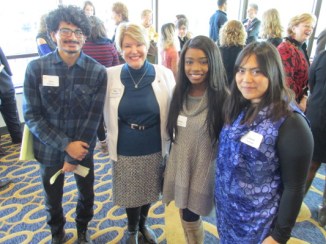
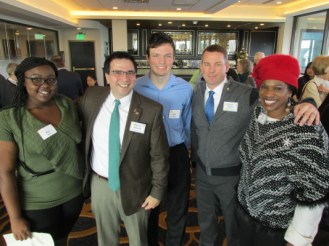
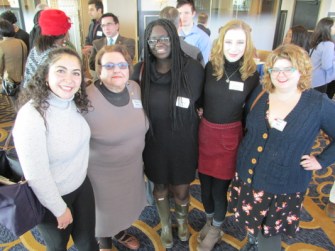
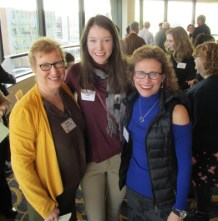
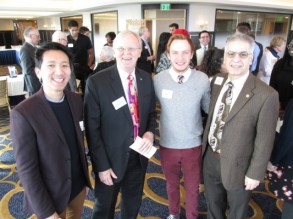
Photo 1: from left, Jose Rodriguez, Mary Thompson, Cynthia Maduka & Liliana Teniente; Photo 2: from left: Ryia Steps, Moses Altsech, Brett Stratton, Jason Beren & Teresa Holmes

With record attendance, over 60 Rotary Scholars and Mentors joined the Winter Mixer event on January 3, 2018.  While mentors and scholars swapped stories, I wanted to learn how the Rotary Scholar/Mentor program had influenced them.

The importance of relationships was the overarching theme.   Melanie Ramey’s scholar, Matida Bojang (UW–Milwaukee Pre-Pharmacy) shared that this program is making her dreams come true.  Ryia Steps (Alcorn State Psychology)  connected on many levels with her mentor, Teresa Holmes.  They love coffee and talk about everything.  Jose Rodriguez (UW Madison Psychology) has forged a relationship with Rob Van den Berg; Liliana Teniente’s (UW Madison Biology) mentor, Dennis Cooley gave her books to read such as “Grit–a Story in Perseverance.”  Donna Beestman’s scholar, Reyna Groff (UW Madison Art) shared she enjoys meeting with someone outside of school.   Rahim Ansari (UW Madison Chemical Engineering) met his mentor, Stan Kitson, through Memorial High School’s Interact program.  Stan commented that he can’t wait to see where he goes!  And my scholar, Cynthia Maduka (UW Milwaukee Communications) has been introduced to a Milwaukee newscaster to further Cynthia’s career in broadcasting.

IMG_0717  IMG_0701

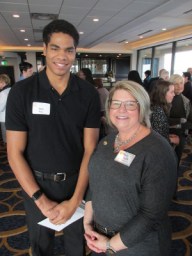
Photo 1: Dom Petty & Stacy Nemeth; Photo 2: from left: Leen Bnyat, Melanie Ramey, Matida Bojang, Hannah Kwiatkowski & Sarah Best

The highlight of the program occurred when co-chairs Cheryl Wittke and Ellie Schatz called for introductions.  It was an impressive group of scholars ranging in majors from STEM to the liberal arts and everything in between.  Teresita Torrence from Madison College explained the resources available to students in their student development center.  Bob Shumaker reminded everyone to follow the Madison Rotary Mentor-Scholar Facebook (FB) page; Linda Baldwin offered $10 tickets to the Overture Center for the Arts by signing up through the Club 10 link on the FB page; and Dean Nelson announced the Summer Picnic on July 1.

IMG_0705  IMG_0697

Photo 1: from left: Becky Steinhoff, Jana Hvorat & Joy Gander; Photo 2: from left: Tenzin Kunsel, Jim Christensen, Eddie Larson & Majid Sarmadi

The group adjourned to the Rotary meeting for more conversation and Charlie Sykes’ presentation.

For more photos, visit our Madison Rotary Mentor-Scholar Group on Facebook.

Our Madison Rotary Foundation awards college scholarship assistance to 25 students per year to assist them during their four years of college, so we have 100 scholars in college each year.  Nearly all of our scholars are connected to a Rotary member who serves as a mentor during their college years.  Since many students are on break this week, we invited scholars to attend our Rotary luncheon on January 3.  It was a great opportunity to check-in with our scholars, and they had a chance to connect with their Rotary mentors.  We enjoyed hosting our scholars and wish them all the best as they head back to college later this month.  Our thanks to Dean Nelson, Ellie Schatz and Cheryl Wittke for organizing this gathering of scholars and mentors just before our Rotary luncheon.