Tag Archives: Rotary Club of Madison

Going Green & Second Century Fellowship Groups Mix It Up at Aldo Leopold Nature Center

October 22, 2014.
–submitted by Karen Kendrick-Hands
From left: Bob Miller, Joanna Burish, Dick & Nina Rieselbach and Nino Amato

From left: Bob Miller, Joanna Burish, Dick & Nina Rieselbach and Nino Amato

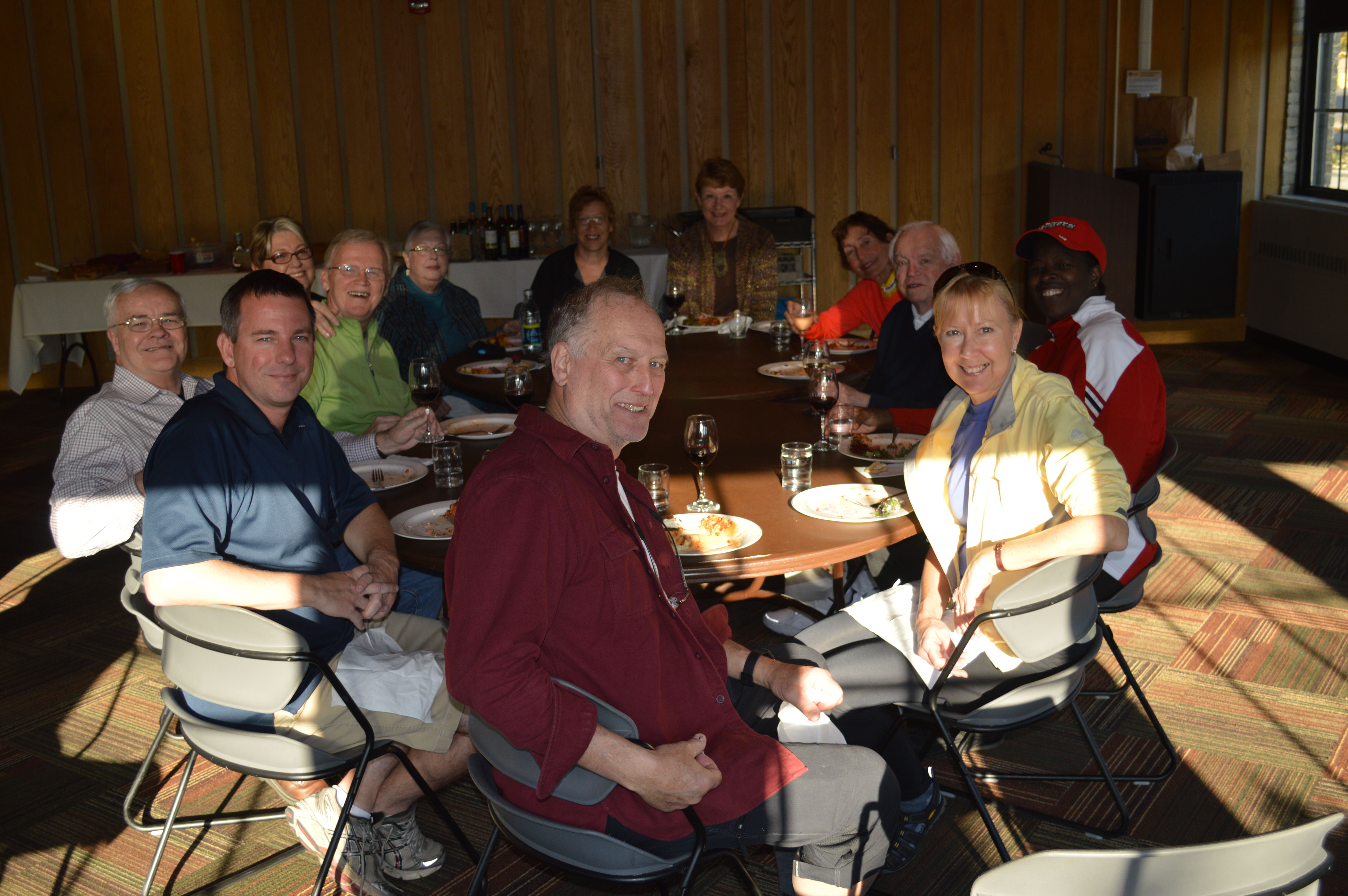
Twenty members  accepted President Tim’s challenge to commingle our two fellowships when we met to tour the Aldo Leopold Nature Center [ALNC]. We shared hefty snacks, and hot cider as we made new friends, networked and found common ground.

We were greeted by the announcement screen gently celebrating our club’s vote to help RI dialogue about climate change.  Rotarian Bob Miller welcomed us to the Center in his role as ALNC’s new Executive Director, as well as to Monona, in his role as Mayor.

Bob shared how ALNC came to be an oasis of wildness: prairie, wetland, woodlands, with nature program for kids, just off the beltway. Director of Community Engagement Sierra Munoz gave us a tour of the Climate Science Education Center where thousands come annually to learn about climate, weather and earth science using high-tech interactive features found nowhere else in the region.
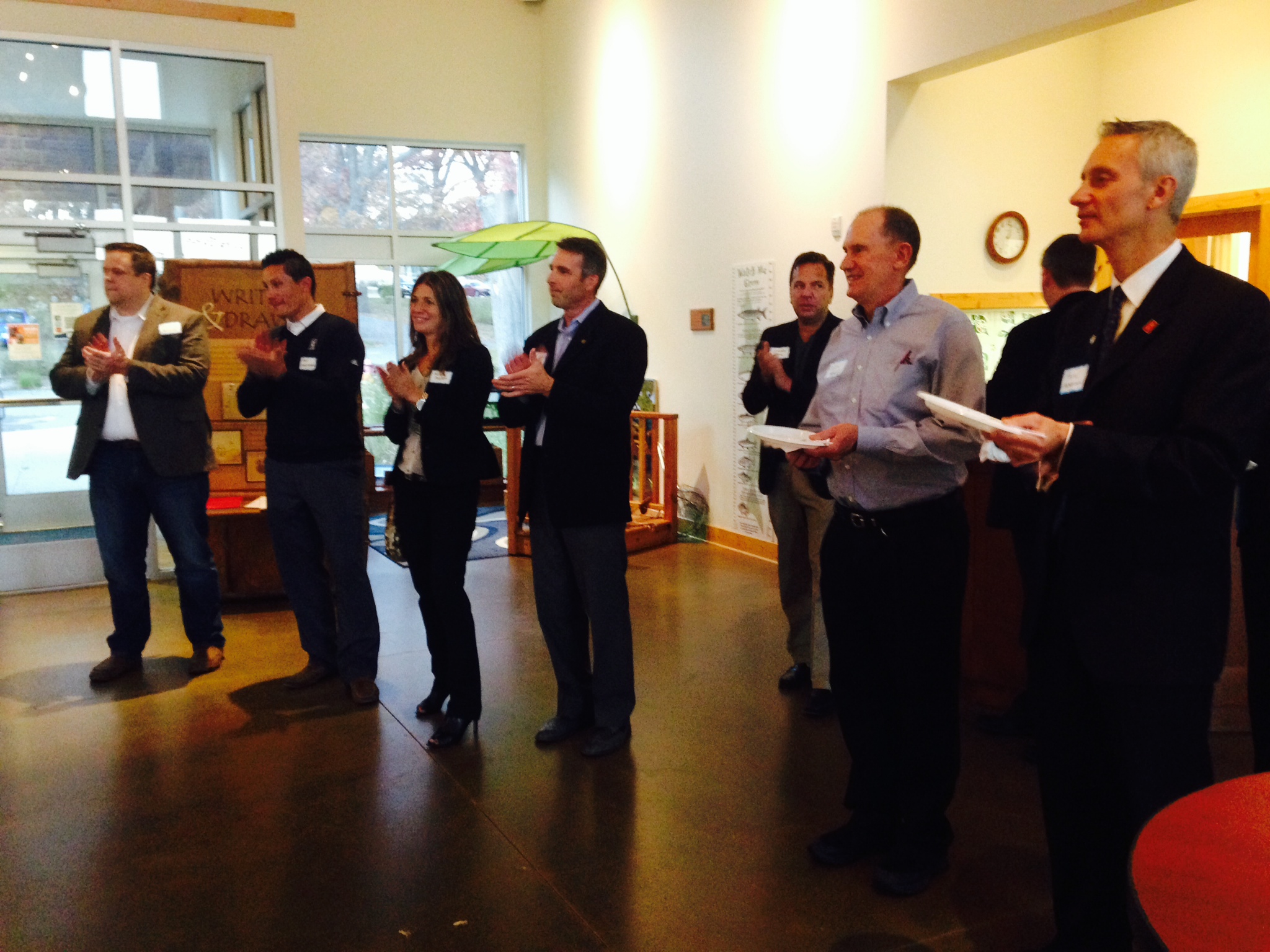
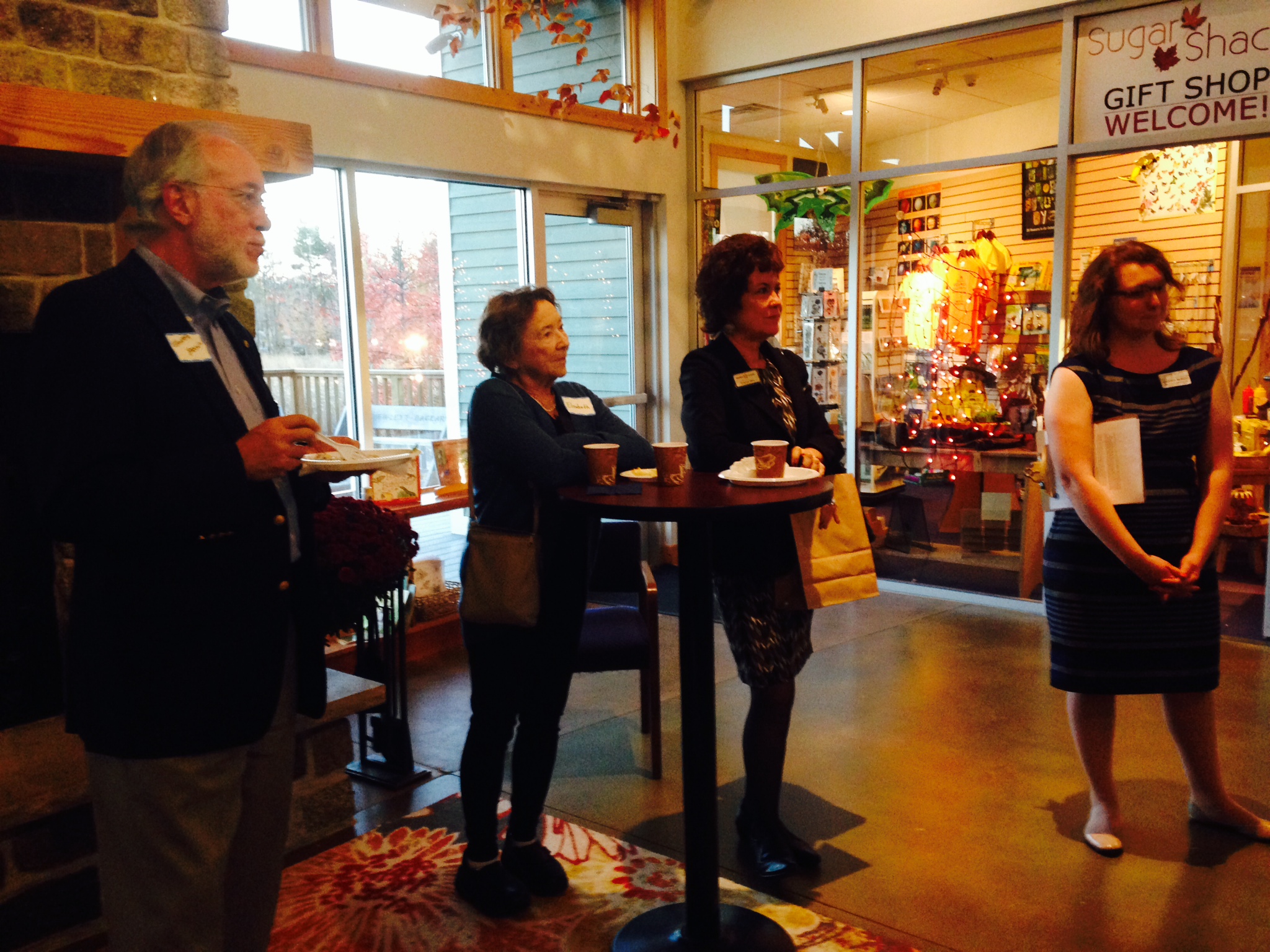
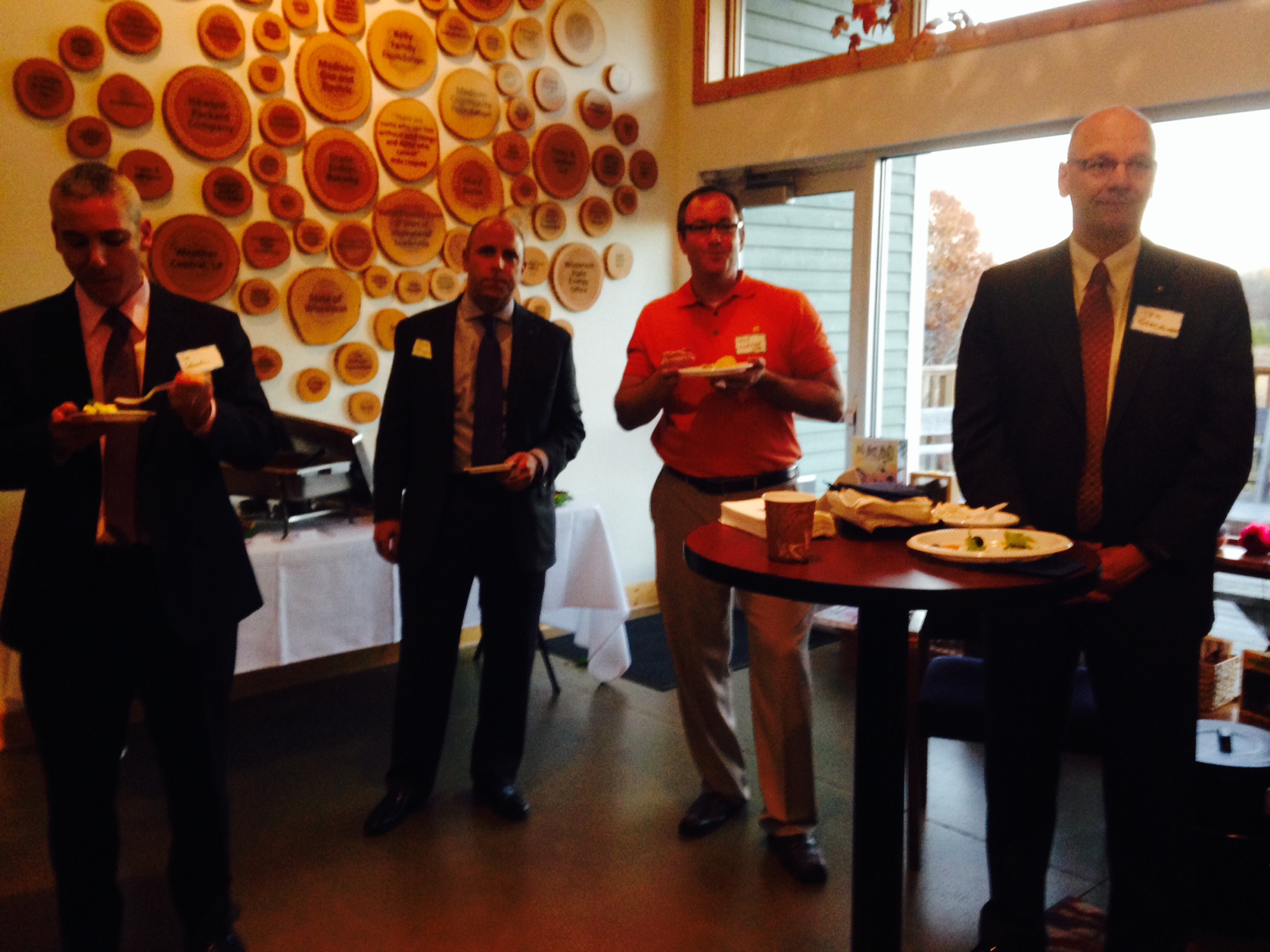
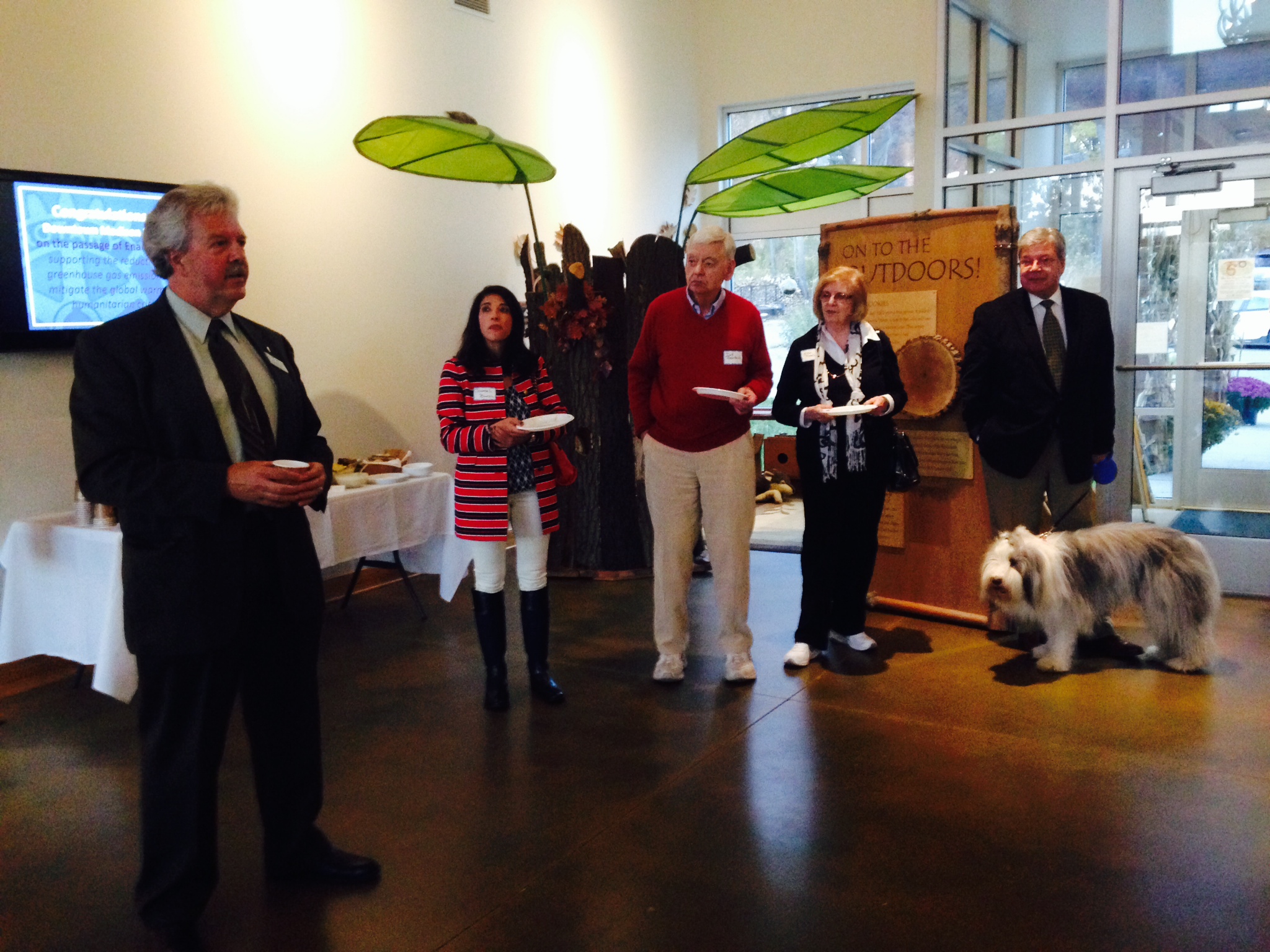
photo 2  photo 3  photo8

(Photo 1: from left: Philip Petrowski, Mike Kosolcharoen, Michelle McGrath, James Tye, Larry Hands & Paul Riehemann; Photo 2: from left: Ellsworth Brown, Becky Stienhoff’s Mom, Kris Ashe and ALNC’s Sierra Munoz; Photo 3: from left: Lee Schwartz, Rob Ringeisen, Nick Curran and Tim Stadelman)

We were all intrigued with the “Science on the Sphere,” – the only one in Wisconsin – on which we watched NASA film clips of global storm tracks, night lighting patterns, jet stream waves and so much more.

Great minds are already pondering holding a  “family friendly Rotary event” at this hidden treasure.

We more than fulfilled District Governor Dave Warren’s wish that we have 10% more fun!

Community Dialogues: Science and Practice

–submitted by Kevin Hoffman; photo by Mike Engelberger

Steve QuintanaUW-Madison Professor Steve Quintana of the Department of Counseling and Educational Psychology shared interesting and practical insights into the value of community dialogues to address issues in the community such as race, ethnicity, and nationality.

He started by discussing whether racial bias is innate or learned by studying children as young as 3-6 months.  What he found was that there is an Other Race Effect (ORE) that occurs when a child is exposed to a face from an unfamiliar race.  Through brain imaging, ORE was determined to be a neurological response such as a flight or fear response.  So, even from a young age we are conditioned to react to that which is different.

While we seem to be hard-wired to react to the “other” we are also capable of change.  We often have conflicting feelings about the implicit response of ORE versus our explicit attitudes (“I don’t see race!”).  This causes cognitive dissonance that can be handled by avoidance of the “other”, rationalization (believing in stereotypes), or by actively working to change our implicit attitudes to match our explicit attitudes.

How do we effectively promote understanding and positive values?  Professor Quintana found that the most effective methodology was through experiential learning in a structured, safe and open environment (dialogue).  This means that participants agree that all members have equal status, cooperate by listening and disclosing, have a shared goal of greater understanding, and have the support of an authority such as a government, university, military institution or neighborhood.

This is the process of community dialogue:  Listening carefully enough to be changed by what you hear.  Specifically, sharing heartfelt disclosures to engage the understanding of others, respectful listening and openness, avoidance of trying to persuade or teach, and humanizing the “other” through first-person stories and experiences.

Professor Quintana has studied and used community dialogue for reconciliation and understanding in a wide variety of situations and topics, and encouraged us to find opportunities for dialogue in Madison to engage the community in improving inter-racial understanding and connection.

Culinary Arts Fellowship Group Enjoys Harvest Meal at The Madison Club

–submitted by Patty Struck; photos by Paul Hoffmann

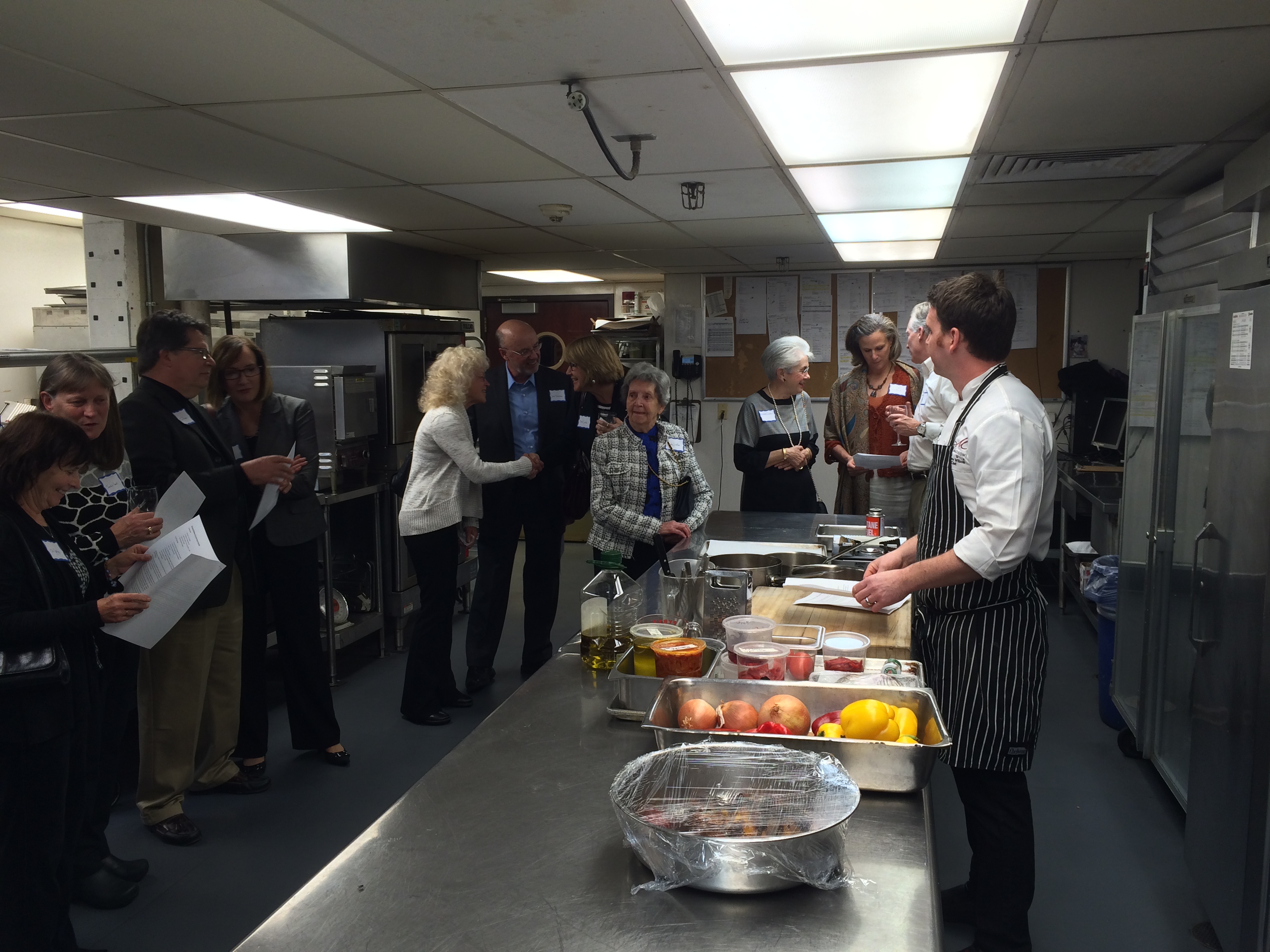
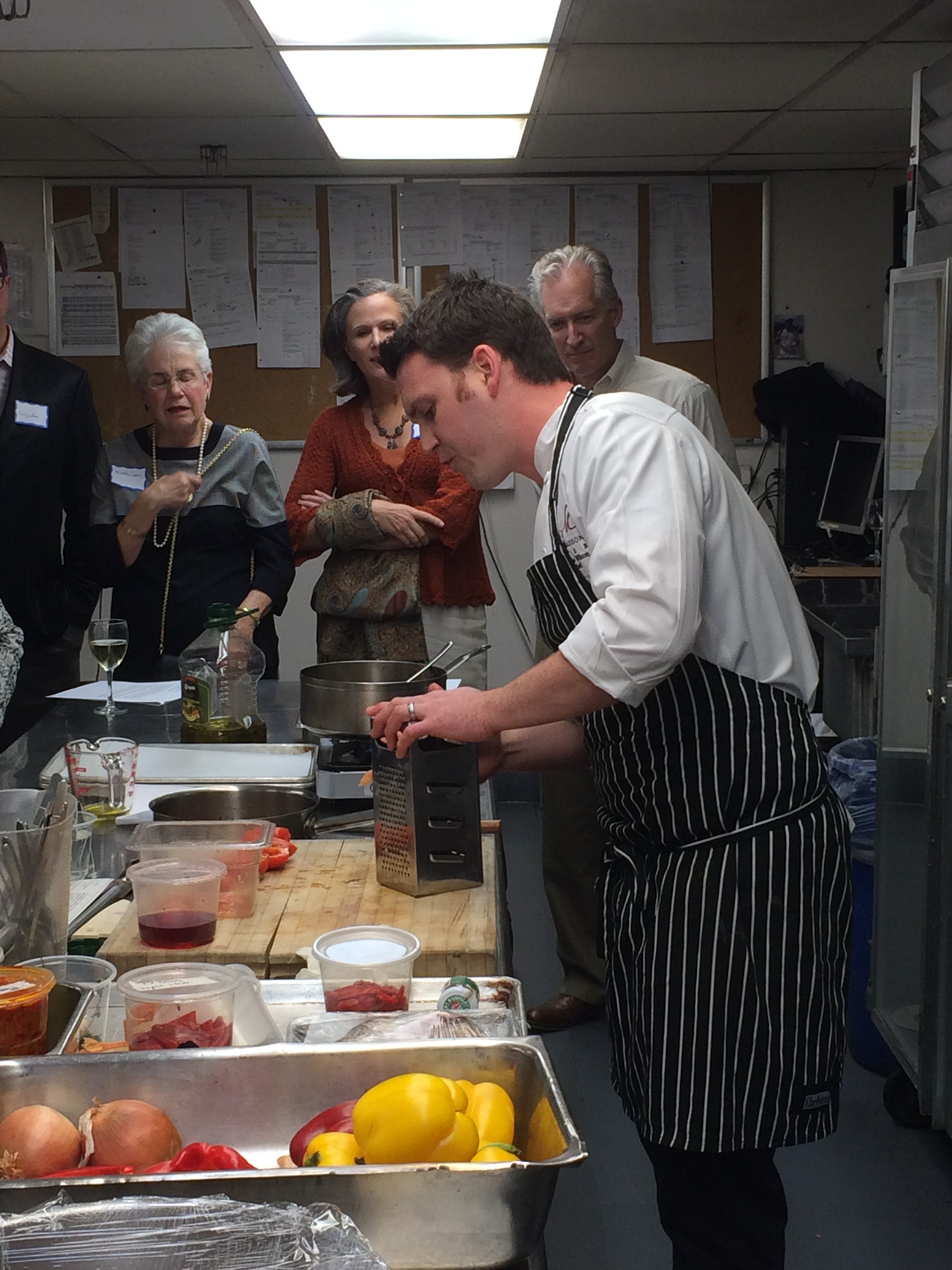
Madison Club’s Chef Andrew Wilson gives a demonstration in preparing trout piperade for Rotarians and their guests.

Madison Club’s Chef Andrew Wilson gives a demonstration in preparing trout piperade for Rotarians and their guests.

A group of 25 Rotarians and guests gathered at The Madison Club for a Rotary Club Harvest Menu dinner organized by the Culinary Arts Fellowship Group on Monday, November 3.

2014-11-03 18.48.59


Following some time for socializing, we enjoyed a cooking demo by Chef Andrew Wilson in the Madison Club kitchen. Chef Wilson demonstrated his knife-wielding skills in the preparation of the fish course, trout piperade.


The evening concluded with a four-course meal – with appropriate wine pairings –  featuring sunchoke soup, trout piperade, gnocchi with beef, and brown butter cake with poached pear slices. Delicious!

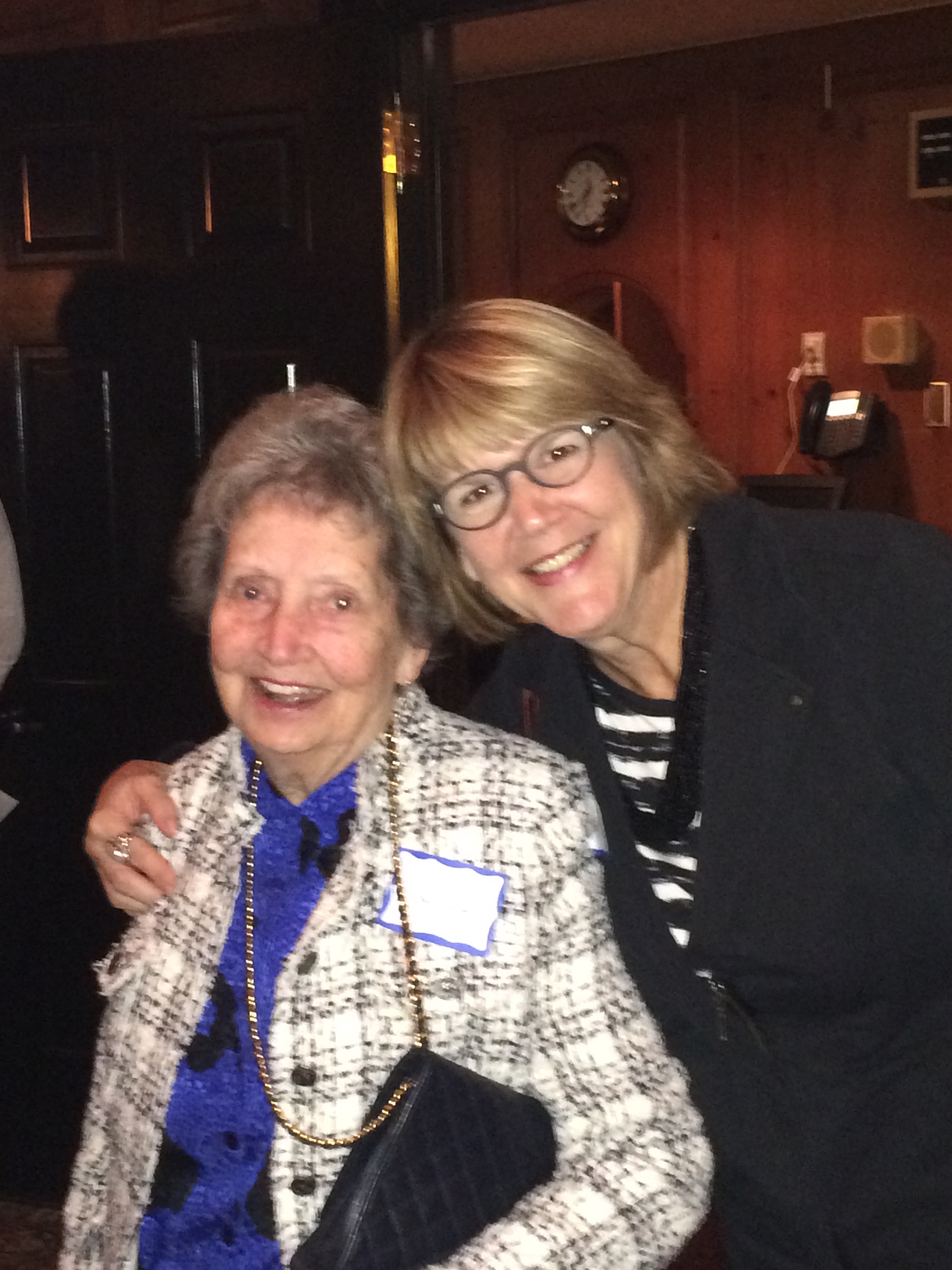
2014-11-03 18.39.06  2014-11-03 19.13.49  2014-11-03 20.21.16

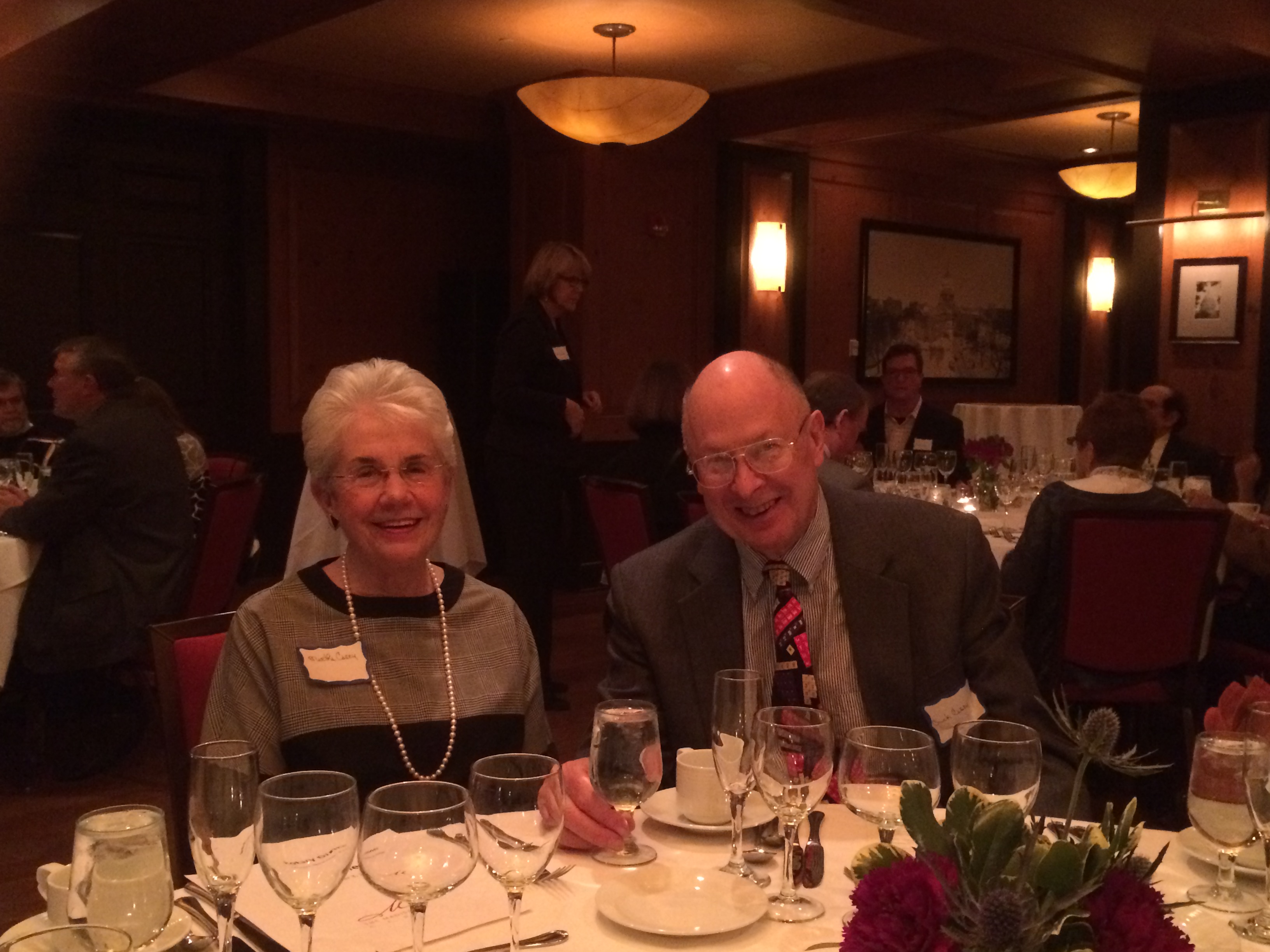
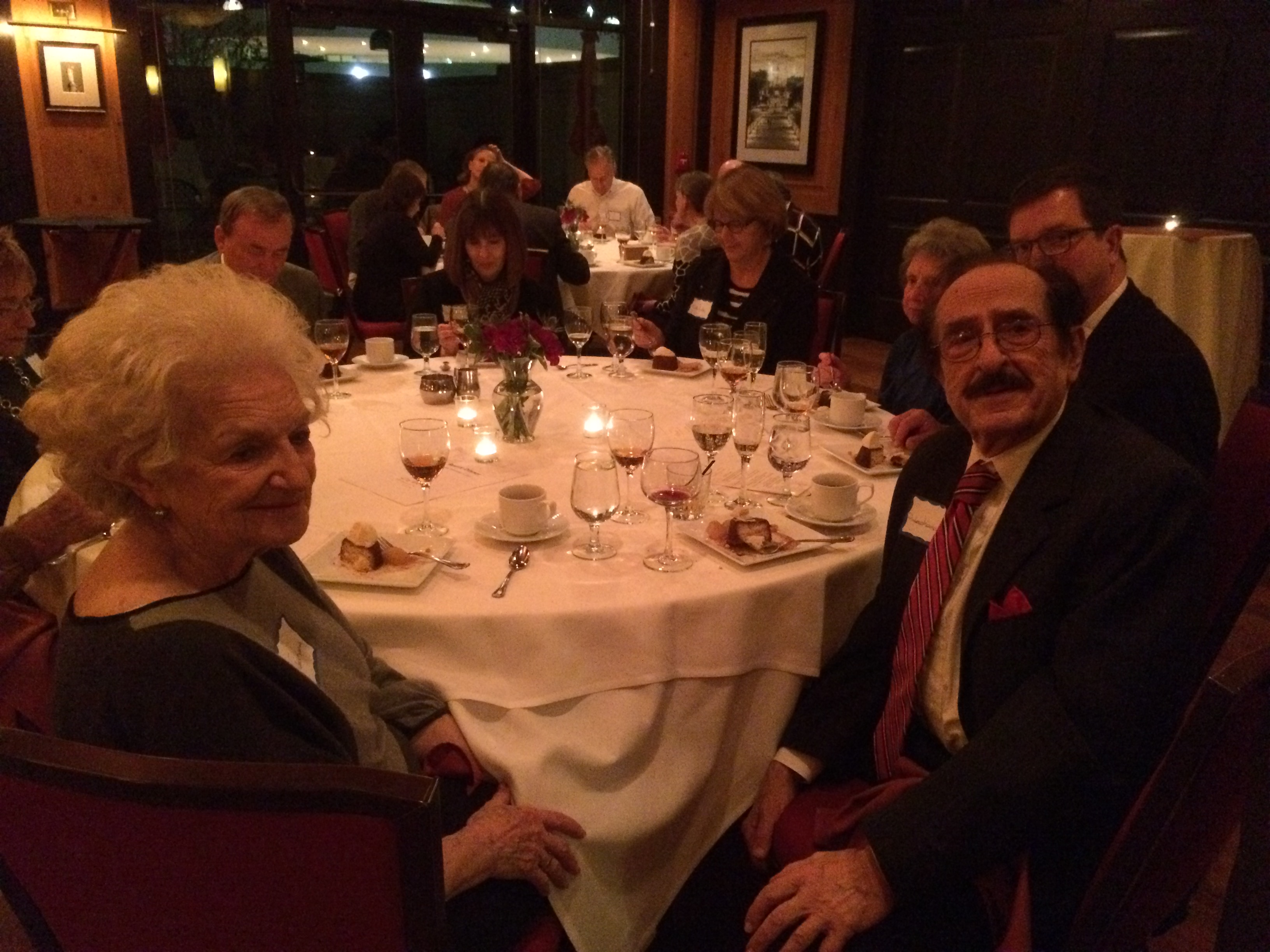
(Photo 1: Cindy Durham & Cathy Durham; Photo 2: Martha & Chuck Casey; Photo 3: Valerie & Andreas Kazamias)

To wrap up the evening, we toasted Valerie Kazamias for planning this delightful event!

“Service Before Self”

–submitted by Bill Haight; photo by Pete Christianson

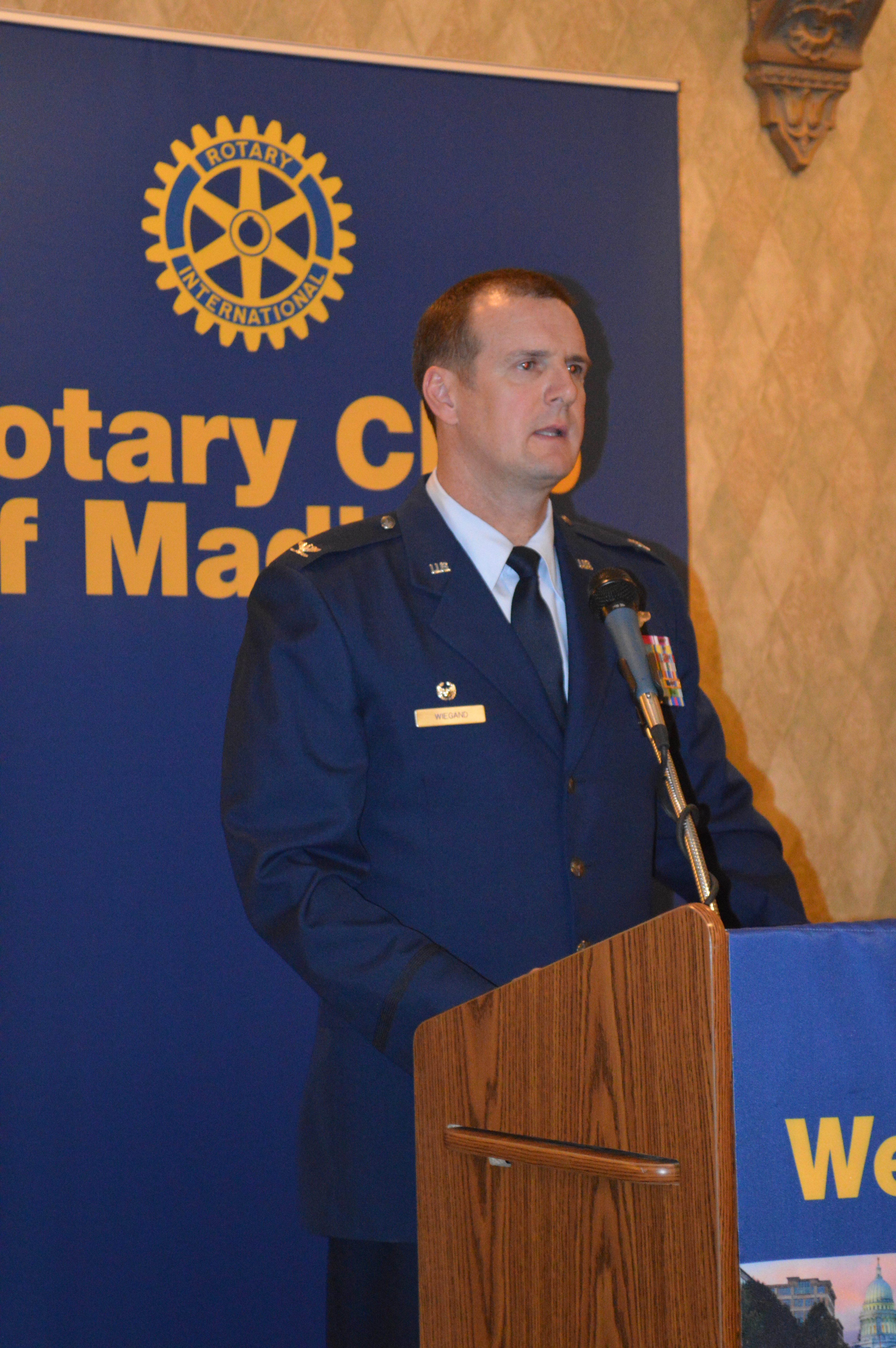
Weigand Jeff“Service Above Self” is the Rotary motto. “Service Before Self” is the motto of the Air National Guard. In noting the similarity, Colonel Jeffrey J. Wiegand, commander of the 115th Fighter Wing, Wisconsin Air National Guard, emphasized the role of his organization within the community.

The unit is composed of over 1,100 men and women, including 445 full-time employees .The rest are “citizen airmen” who live and work within the community 28 days a month, and train for two days. The total payroll is $58.2-million.

The 115th Wing has 35 pilots averaging about 2,000 hours of total flying time each and adding about 150 training hours per pilot annually. Maintaining flying hours is a major measure of a unit’s size and strength. Colonel Wiegand noted that his unit, as a joint state-federal entity, is less susceptible to “sequestration” which calls for the full-time Air Force to cut costs ten percent annually.

Colonel Wiegand said he strives to assure that the unit is a valuable resource to the greater Madison area. In addition to being called for overseas missions, the ANG can provide domestic assistance such as mobile medical facilities, search and rescue, drug surveillance, and bomb disposal.

The 115th  Fighter Wing is a tenant of the Dane County Regional Airport, paying part of its “rent” by providing fire and rescue services for the entire airport. His pilots also work closely with the airport to minimize noise complaints.

Colonel Wiegand sounded as much like a business leader as a military commander when he talked about his desire to maintain strong relationships within the community and provide a good place to work so highly skilled personnel can be retained after their minimum six-year reserve duty is finished. That retention rate currently stands at an admirable 60 percent.


Big Wheels Bicyclists Meet with Dinner & Discussion Group October 26

–submitted by Joan Collins; photos by  Pete Christianson & Teri Venker

Goodman Event Oct 26 2014 7

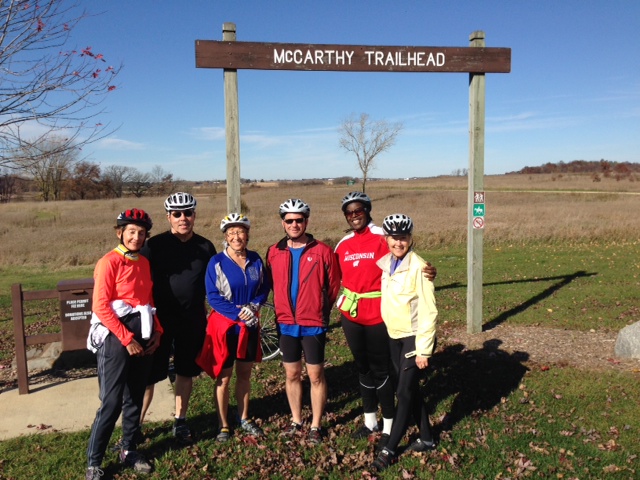
(Pictured above from left: Jason Beren, Dawn Crim, Ed Van Gemert, Joan Collins, Becky Steinhoff, Teri Venker & Terry Jacobson)

Ever been to McCarthy Reserve? Even know where it is?

SPOKESwoman Becky Steinhoff who led the Big Wheels Bicycling Fellowship fall bike outing on Sunday, October 26, took us there during a hilly trip through the fall colors.  Our bike wheels met the pavement in Madison, Monona, Cottage Grove and the Town of Burke before we headed back to our stating point, The Goodman Center, where we doubled our numbers for food and conversation.

Goodman Event Oct 26 2014 6  Goodman Event Oct 26 2014 2  Goodman Event Oct 26 2014 5

(Photo 1: from left: Joan Collins, Ed Van Gemert, Becky Steinhoff, Jason Beren, Dawn Crim & Teri Venker; Photo 2: from left: Joan Collins, Bill Waldbillig, Sandra Christensen & Jim Christensen; Photo 3: Pete Christianson)

From left: Jason Beren, Jim Christensen, Dawn Crim & Roger Phelps

From left: Jason Beren, Jim Christensen, Dawn Crim & Roger Phelps

Besides the bright colors on a sunny and no-wind day, we saw Halloween decorations in one neighborhood sure to win prizes in a decorate your yard contest, as well as farm fields and peaks of Lake Monona.

Back at the Goodman Center, Becky hosted us with her fabulous lasagna (both meat and veggie) and wine, with the rest of us adding to the potluck mid-day dinner.

What’s next? Talk of a cross country ski fellowship as bicyclists switch gears for winter.

The Face of Edgewood College is…

–submitted by Linda Baldwin; photo by John Bonsett-Veal

photo

From left: President-Elect Ellsworth Brown with Scott Flanagan

Everyone!

Scott Flanagan is the 7th President of Edgewood College, after spending 16 years at the college as a teacher and administrator.  Today he gave us an overview of the college.  Begun in 1949 under the leadership of the Dominican sisters, Edgewood College has grown to more than 3000 students in many undergraduate, graduate and non-traditional programs.

President Flanagan recalled that in 1970 the college went co ed and announced this change through a road sign “Now Co ed.”  He surmised this change was not met with enthusiasm as the sign was quickly stolen.

Today the sisters’ legacy is carried out through the good work of all associated with Edgewood; students, faculty and staff, the board of trustees and even the presidents, past and present.

Edgewood College was one of the first in the country to offer the “yellow ribbon” program, an opportunity for veterans to attend college on scholarships.  Today more than 150 vets are attending Edgewood.

Edgewood primarily educates students from the greater Madison area, and they stay in the area after graduation.  Flanagan proudly pointed to the fact that only 3% of 2013 grads were still looking for work; 97% were working, in the military or doing graduate work.

He also talked about the programs for returning students seeking professional advancement through Edgewood programs, serving traditional and non-traditional students and invited everyone to the “Stream,” Edgewood’s new arts complex.

It’s Wisconsin, so Flanagan mentioned the 15 sports programs at the college, the robust study abroad program, the community internships which take students out into the community for service and civic engagement, offering more than 200,000 hours in service.

In closing, he touched on the partnerships with area businesses that provide additional scholarship money for students; the emphasis on inclusivity, noting that 15-20% of Edgewood students are minorities with retention rates almost as high as the student body in general and affordability, noting that 94% of Edgewood students receive some sort of financial aid.

President Flanagan closed by asking Rotarians to get involved with Edgewood to help meet our society needs for qualified workers, engaged citizens, servant leaders and scholarly problem solvers.