Tag Archives: Rotary Club of Madison

“Rotary Bingo” at The Madison Club October 21, 2014

–summary & photos submitted by Jason Beren

20141021_083557

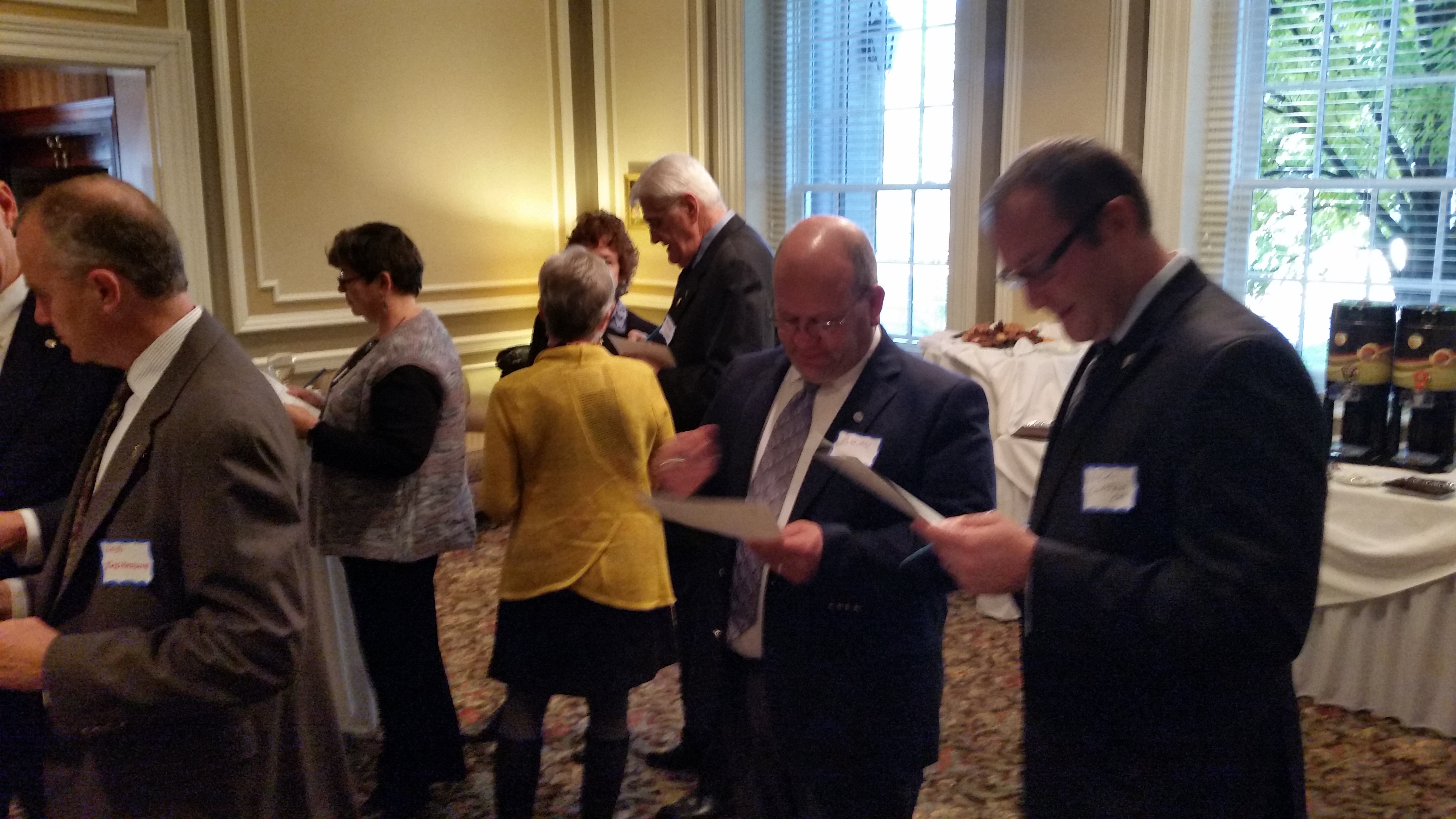
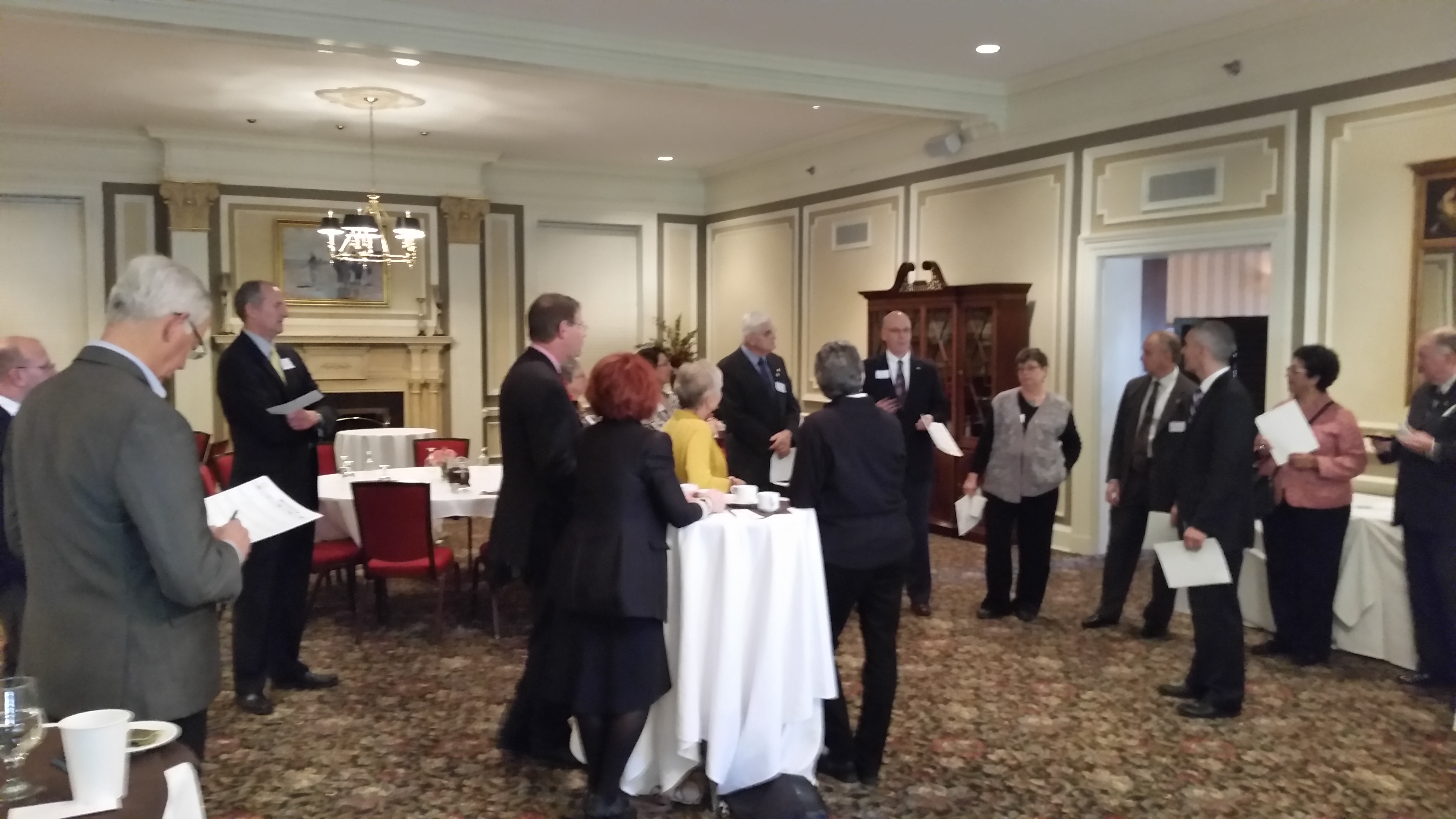
On Tuesday, October 21, at our New Member Event, about 25 new and experienced Rotarians attended a coffee event at The Madison Club (Thanks to Mary Gaffney-Ward for the use of the great room).

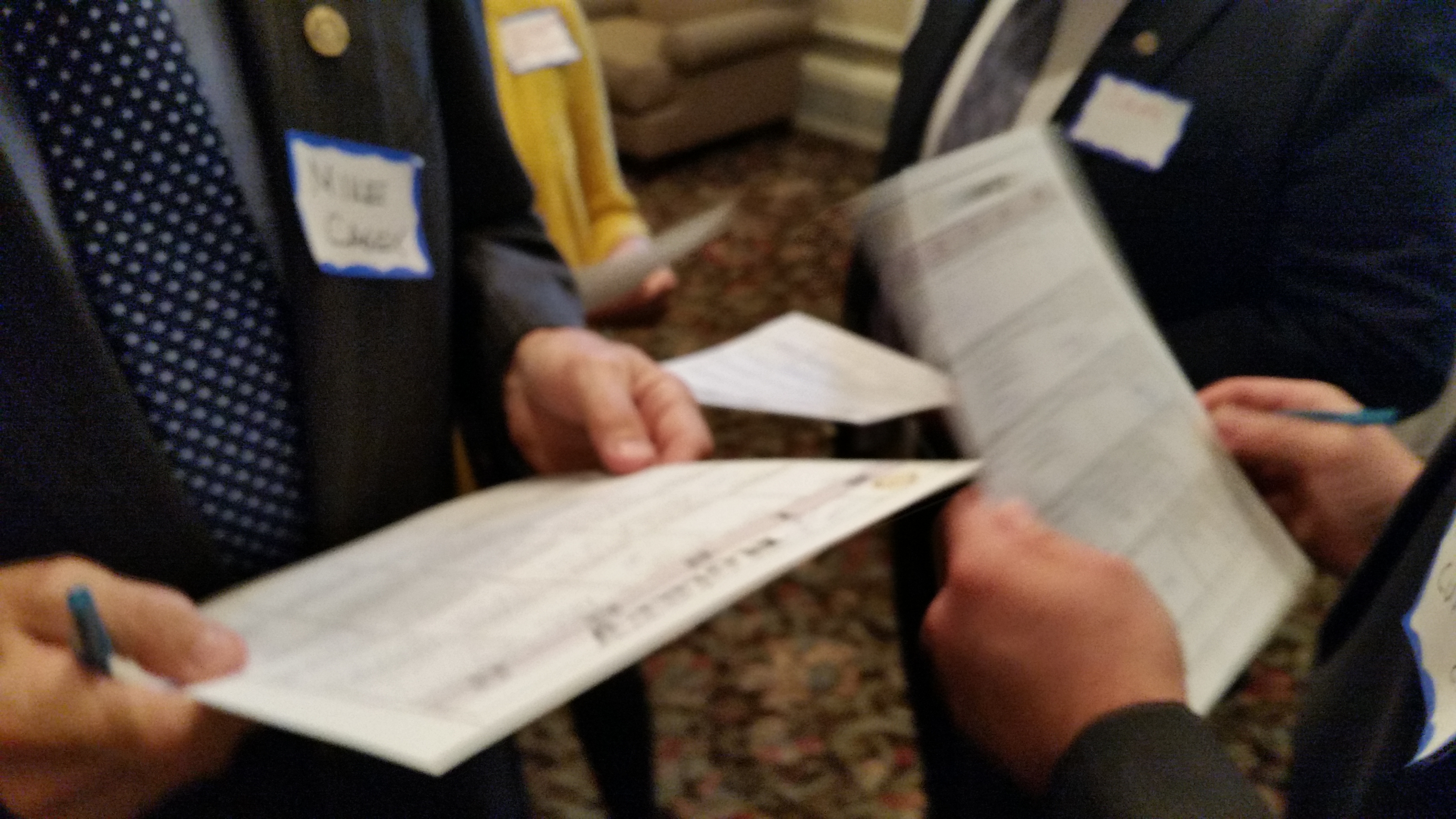
The focal point of the event was a cutting edge networking activity known as “Rotary Bingo.”  Much like a scavenger hunt played with a bingo card, attendees had to work their way around the room to fill out their card with the names of the Rotarians who matched each square.

20141021_080623  20141021_083621  20141021_080749

Prior to the event, attendees completed a survey with questions such as:

  • What is something about yourself that’s unique and people might not know about you?
  • Where were you born?
  • Who were your Rotary Sponsors?
  • What high school activity, club, or sport did you participated in?
  • What unique event have you attended?
  • Have you ever done a unique Rotary make-up international or domestic?

Attendees learned that some of their fellow Downtown Rotarian’s have:

  • Been a ski bum for a winter
  • Spent two months deep in the Amazon jungle
  • Attended a cocktail party on Malcolm Forbes yacht
  • Did a Rotary make-up on Easter Island

20141021_084405

Autumn Hike at Louis’ Bluff on October 18, 2014

–submitted by Katie Ryan; photos by Herman Baumann, Karl Gutknecht & Susan Hunt

Group Photo

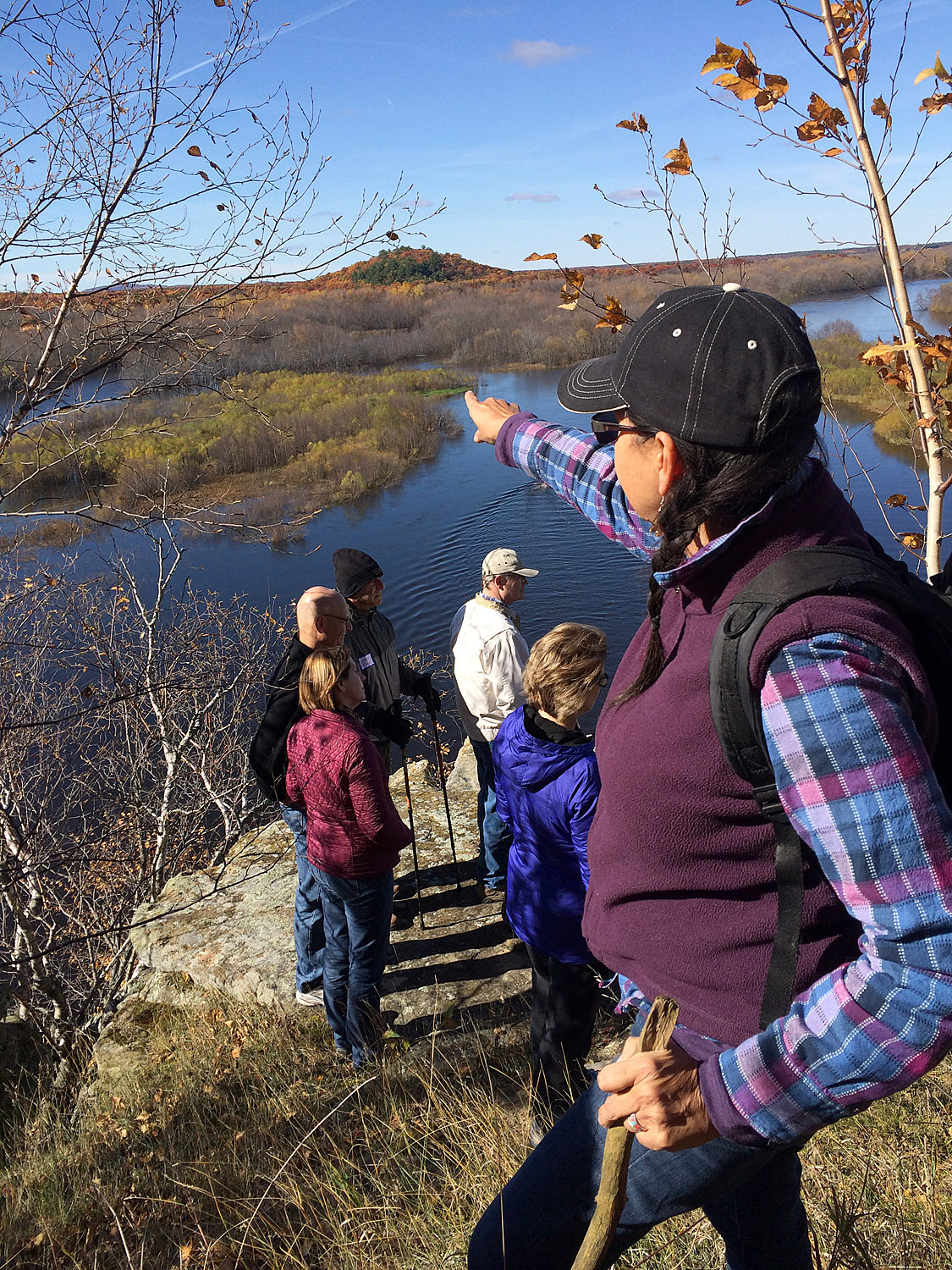
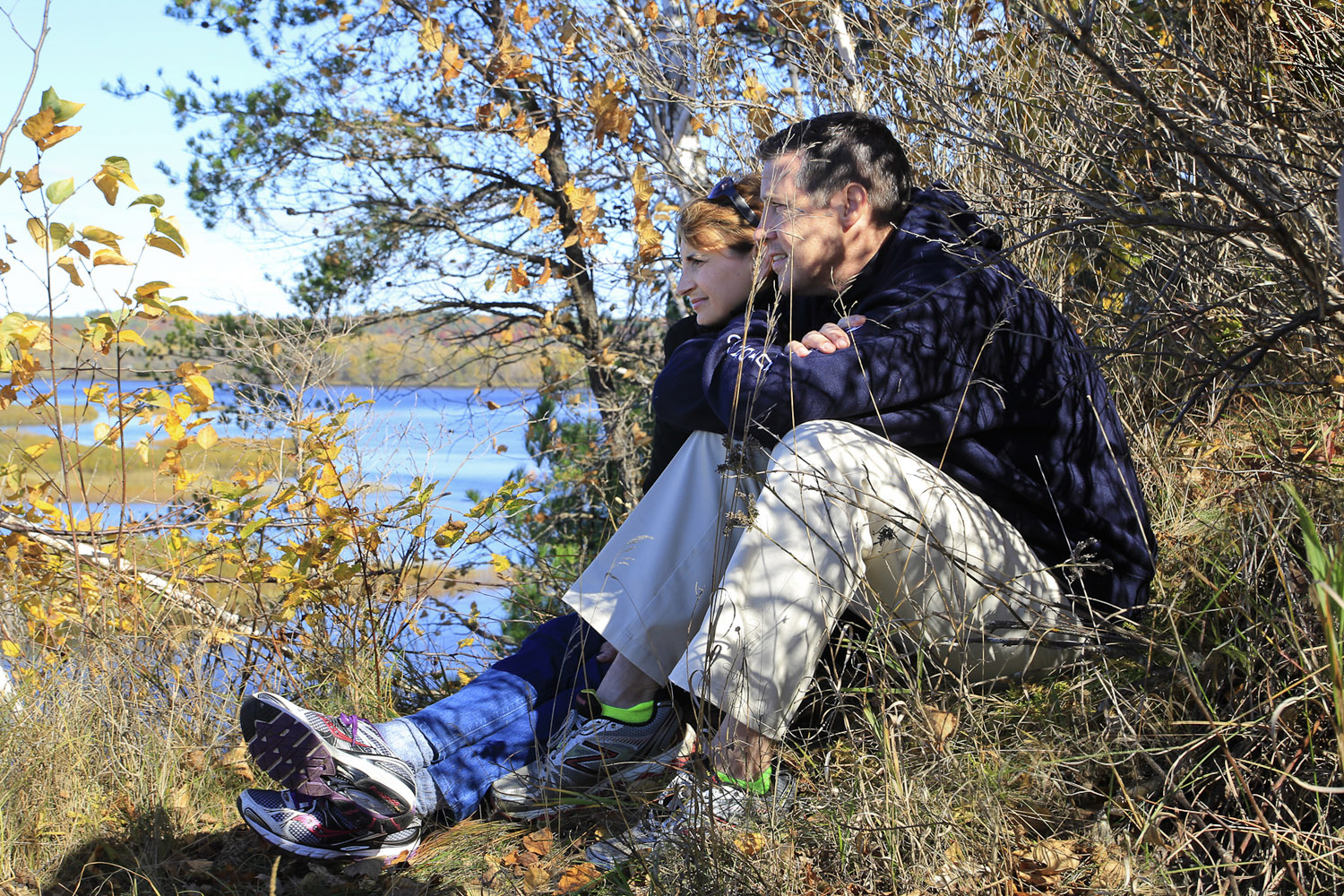
On Saturday, October 18, the Rotary Special Events Fellowship Group, Hiking Fellowship Group and Big Wheels Bicycling Fellowship Group and guests were invited to Frank and Mariana Weinhold’s beautiful 135-acre property, Louis’ Bluff.  The farm was settled in 1847 and is one of the oldest in Juneau County. It includes 7000 feet of shoreline along the Wisconsin River and a spectacular rocky bluff that provides an incredible view.  The October 8 Rotary speaker photojournalist Mike Kienitz went out to the site, which is about an hour and a quarter’s drive from Madison on the north side of the Wisconsin Dells, and captured the panorama with his camera-fitted drone.

At the N overlook  Photo16  Dells

You can watch his October 11, 2014,  at the you tube video “DRONE IN THE DELLS“. Our hike was on the same sort of glorious, sunny fall day.

Photo16  hikers  Photo6

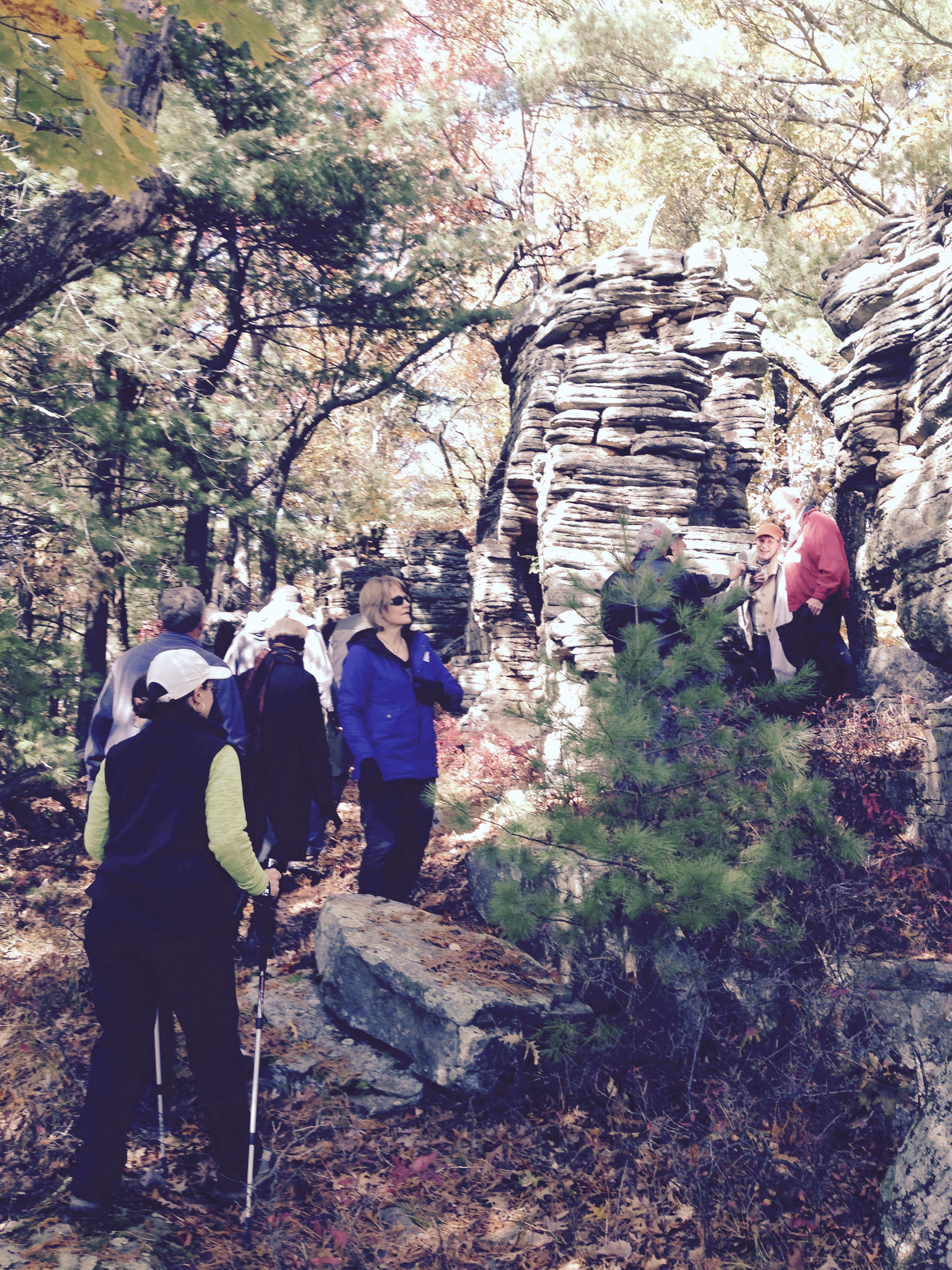
We gathered at the Weinhold’s house for a barbecue lunch and social time before heading out on hikes.  There are flat routes past cultivated fields and through the oak and pine woods to the beaches and a steep climb up the rocky limestone bluffs.  Most of the group of thirty headed up to the top.  There’s an overlook to the north that juts out into the Wisconsin River and provides a stunning view of the formations caused by glacial outwash. The entire property is a private conservation area, and although you see some evidence of civilization, you’d never guess you were down the road from the amusements of the Dells. There is a reminder of the tourism history however, a 1954 cedar-log replica of the Fort Winnebago blockhouse from the Fort Dells amusement park relocated at Louis’ Bluff. It was dedicated in a traditional Ho-Chunk ceremony and there are headdresses from the Bear Clan on display inside.

Native Am flute_ N overlookBesides geological interest, the entire area is sacred to the Ho-Chunk nation.  Melanie Tallmadge Sainz (left), a member of the Ho-Chunk nation whose family has a long history at the site, accompanied the hikers.  At the top she explained the Native American significance of the area and played a beautiful melody on a cedar flute.  She is director of the Little Eagle Arts Foundation.   Another special viewing was an active eagle’s nest on the Weinhold’s bluff. The group reconvened at the house for pie and ice cream.  The Weinholds opened their house, ice house, shed, beach-side gazebo and a cemetery for exploration.  It was a spectacular fall day and a great excursion for the Rotary hiking fellowship.

Fonders  Frank  Photo12

Our thanks to Frank and Mariana Weinhold for their gracious hospitality and to Petie Rudy and Leigh Richardson of the Special Events Fellowship Group for organizing this event.

“It’s Never Too Late to Change”

–submitted by Mark Stover; photo by Pete Christianson
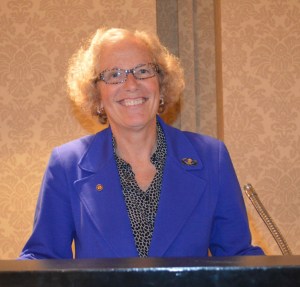
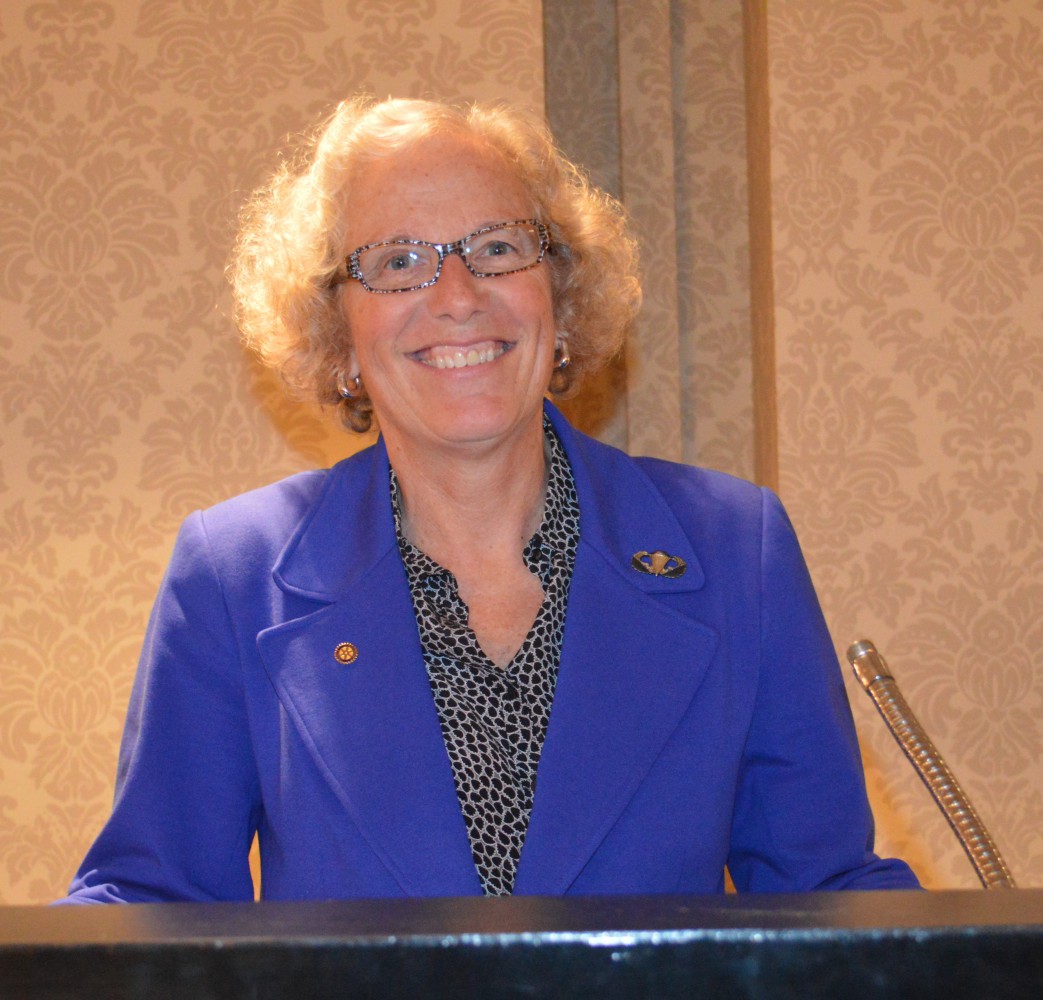
Leslie HowardKeynote speaker Leslie Ann Howard, President and CEO of United Way of Dane County, delivered this message to a full house at the 51st Annual Madison Area Service Clubs luncheon on Wednesday, October 15, at the Sheraton.

Evidence that Howard’s message of changing the human condition is not only possible but happening today in our community echoed throughout the program.

Bill Battista, winner of this year’s Ruth Gordon Service Award changed the human condition for children in the West Madison Little League.  During his involvement, the Little League has grown to encompass participation of over 700 boys and girls in baseball and softball.  Giving kids positive encouragement makes a big difference in their lives and the lives of people around them.

Christine Hodge, winner of this year’s Community Youth Volunteer Award is helping to change the human condition by her focus on children’s education.  She is founder and Director of the Mt. Zion Academic Learning Center which provides after-school tutorial support for all children in the church community and throughout the Madison Metropolitan School District.

Howard noted that “making change at scale” is often less expensive and creates greater measurable improvements in real people’s lives than many of the traditional ways of addressing social needs.  Howard cited data in three areas of the United Way’s recent work.

The initiative called Housing First seeks to insure that homelessness is addressed at its root: keep people in their homes in the first place.  Research shows that once a person enters a shelter they only have a 37% chance of leaving it – that is, getting out of a support situation.  Instead, a smaller investment providing short term support to keep people in their homes results in an 80% chance of long-term independence.

Similarly with people reintroduced to their neighborhoods from prison there is a 67% recidivism rate without intervention.  Journey Home, another United Way initiative, cuts that to less than 5% with an annual investment of $500 per program participant.  By comparison it costs $38,000 a year to keep an offender in prison.

Finally, parenting skills are critical to getting children off to a healthy start in life.  Low income participants in the Parent Child Home Program with only two years of involvement find their kids graduate from high school at that same rate as middle income kids do.

There’s a lot to be proud of among the service providers and service clubs of the Madison area.  CLICK to view Neil Heinen’s recent editorial, “Service Clubs Continue to Thrive in Madison.”

Our thanks to Leslie Howard for her presentation and to Brad Hutter and Kristine Mirelle for providing special music.

Preserving Decades of Rotary Work

logo

September 29, 2014

An Open Letter to Rotary Club of Madison and District 6250 Members,

Working to stop the global warming humanitarian crisis by enacting a revenue-neutral carbon tax (RNCT) will help the most people and will resonate with the next generation of Rotarians. This crisis threatens to undo much of Rotary’s good work. ‘Service Above Self’ dictates that we work to reduce greenhouse gas emissions and inform others. The Going Green Fellowship Group (GGFG) of the Rotary Club of Madison asks fellow Rotarians to take the time to read this letter. We do this for our children, grandchildren and future generations.

The GGFG proposes that between January 2015 and April 2016 Rotarians worldwide learn about a RNCT as a solution to the global warming humanitarian crisis. We are asking the clubs of District 6250 to approve
Proposed Enactment B which supports a RNCT, by December 15, 2014. District approval will set the stage for this critical information sharing and dialogue to occur worldwide – 1.2 million Rotarians in 34,500 clubs in over 200 countries.

CLICK To read the full Going Green Fellowship Open Letter.

Proposed Enactment B    Citations
Proposed Enactment A
Rotary International Council on Legislation – Overview of Process
Two-page Summary of Going Green Fellowship Open Letter
Video


Coach Andersen Addresses Rotary

–submitted by Linda Maremont; photo by Pete Christianson

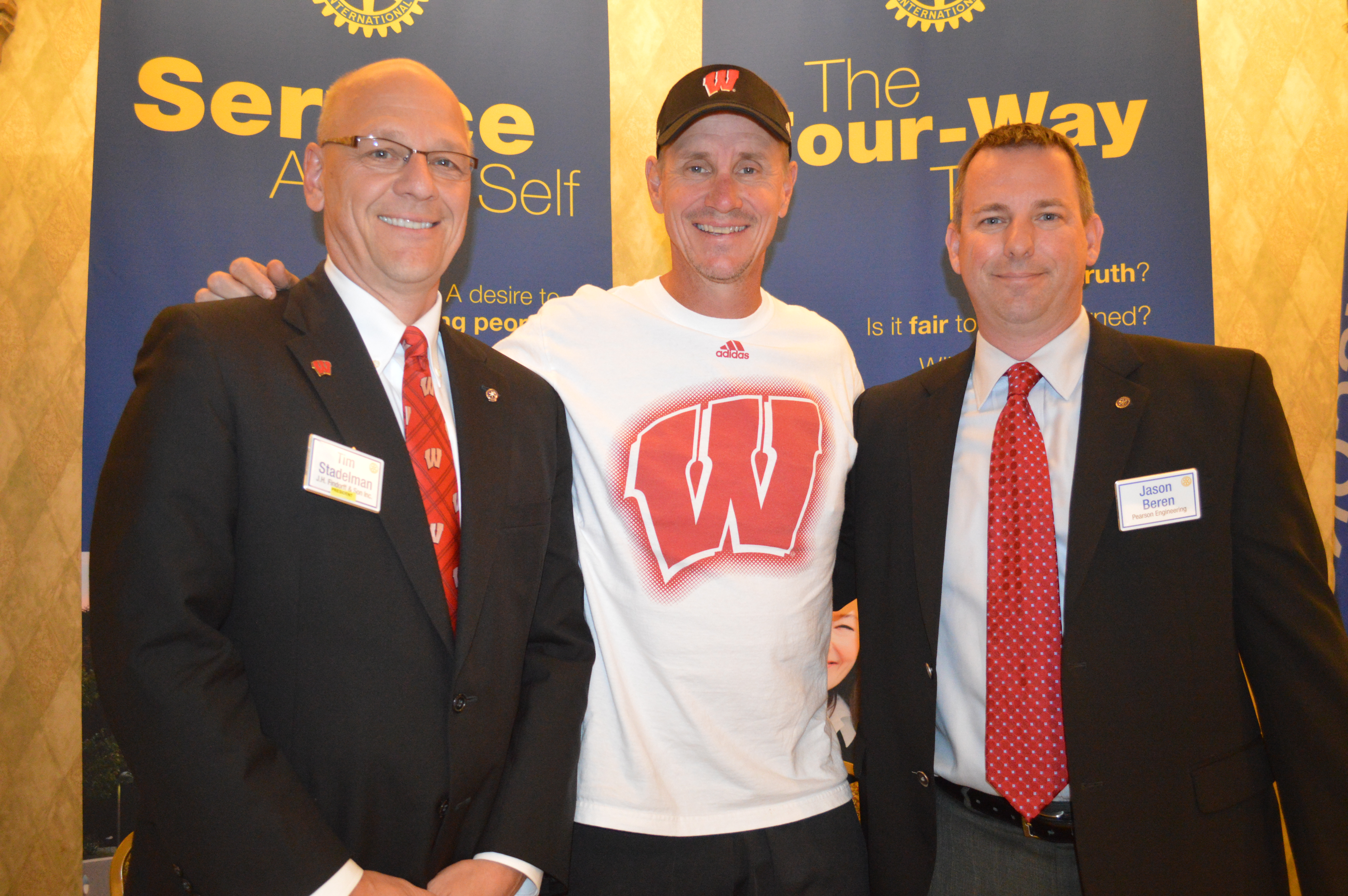
From left: Club President Tim Stadelman, Coach Gary Andersen and Jason Beren

From left: Club President Tim Stadelman, Coach Gary Andersen and Jason Beren

UW Football Head Coach Gary Andersen was greeted warmly by a large audience to our August 13 meeting.  After a successful first season in 2013 (with a winning record of 9-4), Andersen and the players were thrilled to finally officially begin preparations for a season that will begin August 30 against LSU in Houston.  The team is wrapping up a 13-day stretch in which UW will practice every day.

Coach Andersen emphasized the youth of the team this season, but still intends to stay with the physical style of football for which Wisconsin is known.  Even though Andersen mentioned that he will be started more true freshmen than in previous years, he is confident that they are up for the challenge.  He believes that the biggest challenge facing them will not be the physical size difference that comes along with starting younger players but the experience in a competitive environment.  These players are lucky to be on the “good guy” side of the ball as Camp Randall has been recently ranked the most intimidating college stadium in the country by ESPN.  However when it comes time to travel to Texas to play LSU, the young players’ poise will truly be tested.  The coach spent a fair amount of time discussing how the team, more specifically the offensive and defensive lines, are developing. It is apparent that he knows what is most important and what needs to be emphasized for the Wisconsin run heavy style of play to be successful.

He has a deep love for his team that extends beyond just basic football.  Wisconsin has been and will continue to be one of the top ranked schools in terms of athlete academics.   Coach Andersen noted the team’s average GPA is nearing 3.0, which is impressive for a team at a top ranked university.  The fact that not a single player who graduated last year came back to ask for a position on Coach Andersen’s staff is a testament to how important academics are to the football program and the University as a whole.

Coach Andersen delivered an excellent speech that calmed some fears and excited the fans in the audience about the season to come.  When asked about how it feels to coach his son, Coach Andersen responded that he treats every player like his son–which earns him respect along with forming a bond of trust between him and his players.

Coach Andersen’s remarks gave testament to his passion for the game, his team and his excitement to be part of UW and Madison.  On Wisconsin!

We thank WisconsinEye for videotaping our meeting this week.  CLICK to watch the video.

Does Nixon Really Matter Today?

–submitted by Roger Phelps; photo credit to Pete Christianson

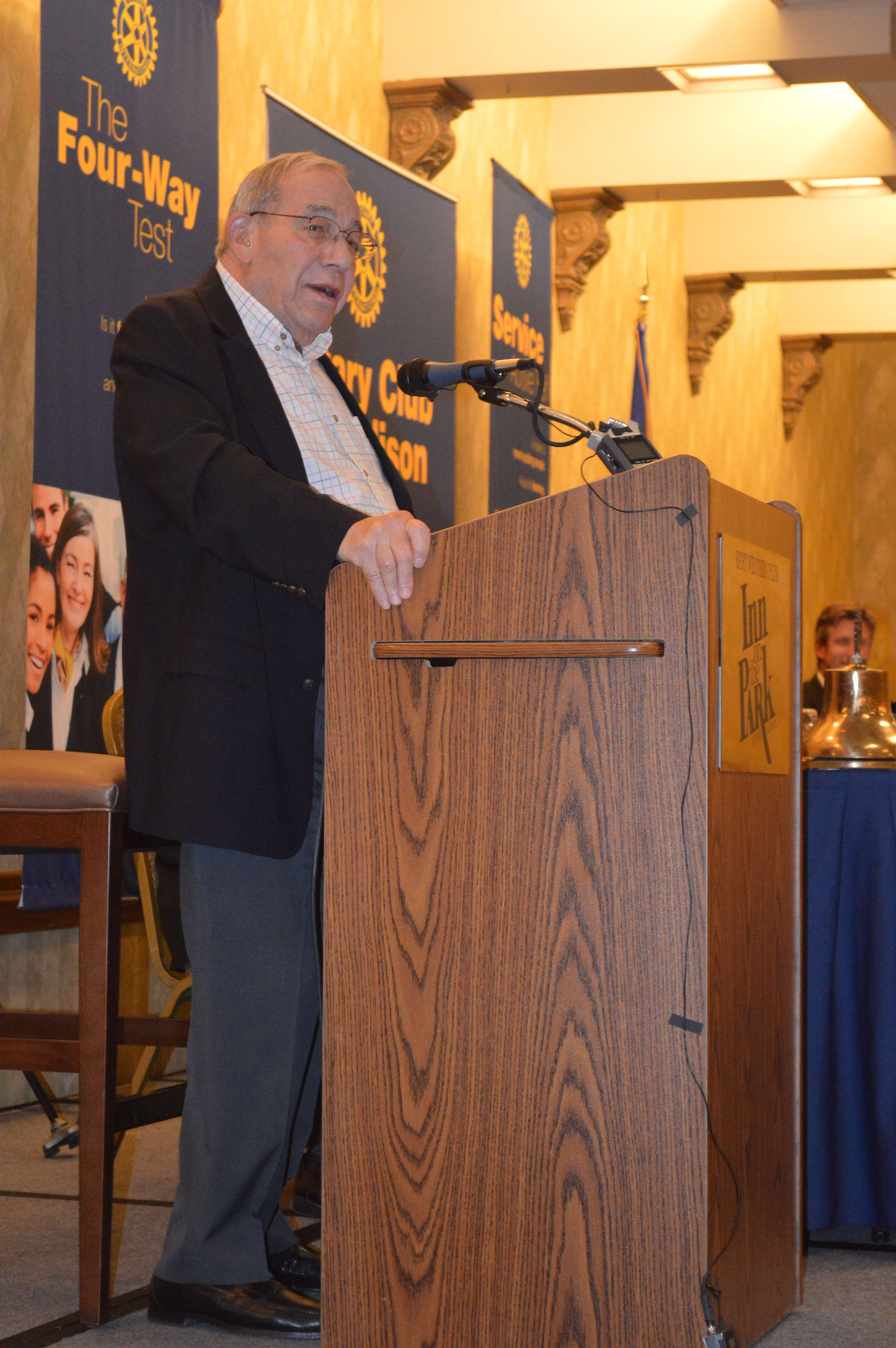
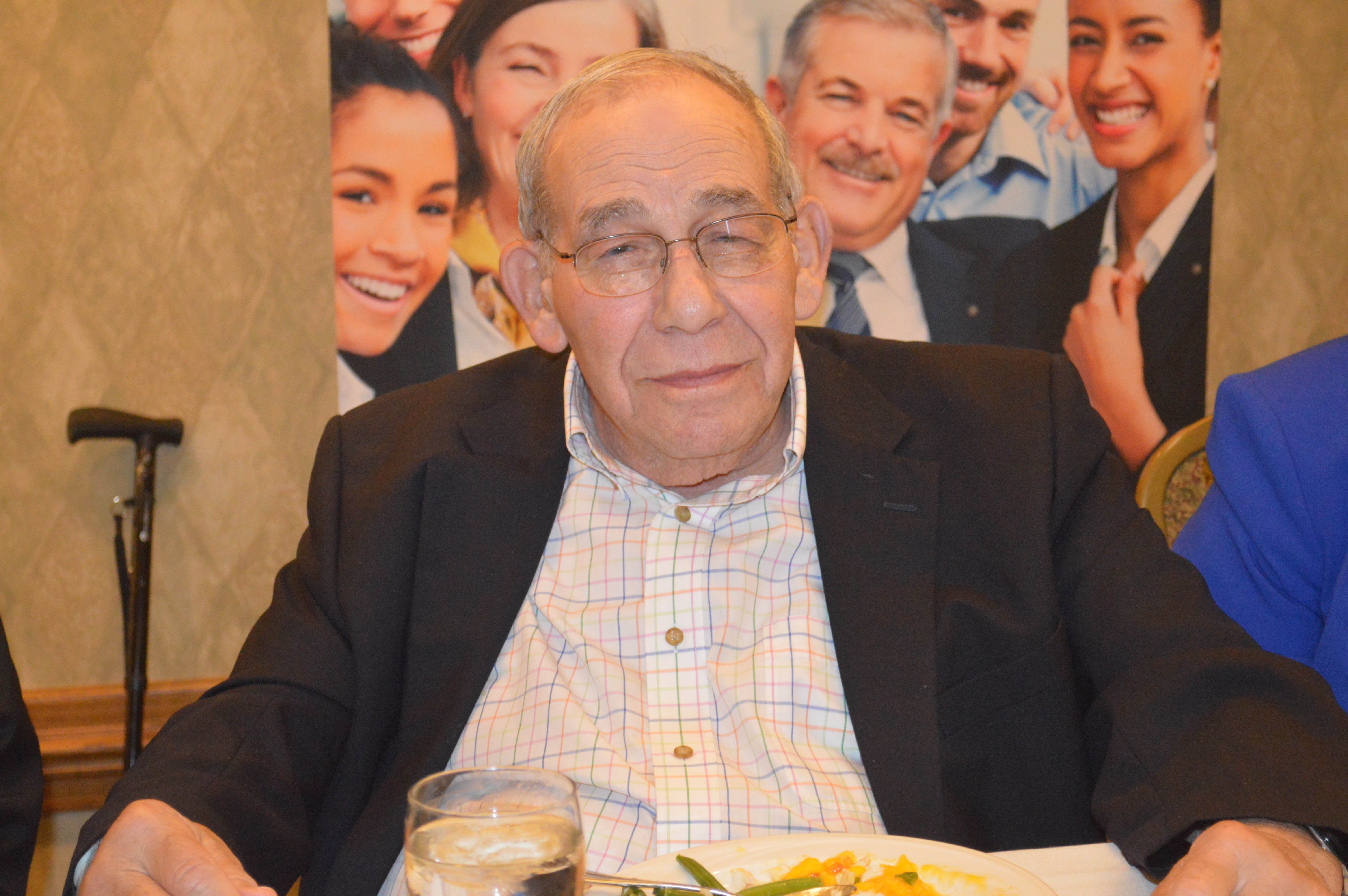
DSC_0025Professor Stanley Kutler provided a coherent and passionate explanation of why Richard Nixon still matters.  Although it has been 40 years since his resignation, the Nixon legacy endures.  And, it’s largely not what people focus on when they think of Nixon.

President Nixon was the first and only U.S. President to resign office.  The Watergate scandal and the unprecedented Presidential abuse of power was his undoing.  The outcome of his certain impeachment was beyond question, but Nixon avoided it by resigning office.

Aside from this significant event in American history, why does Nixon matter?  What lasting impact still felt today had its roots in his administration?

One of the legacies is the Southern Strategy pursued in the 1968 election of Nixon.  He actively and directly courted support among Southern democrats and got enough of them to vote Republican to put him in office.  The replacement of Democratic Party voters with Republican voters cemented Nixon’s position and affected every election since then.  It is one of the major political realignments in American history.

Another lasting impact of President Nixon is the significant influence he had on the Supreme Court.  In a period of less than 3 years, Nixon appointed (and got confirmation) of 4 Supreme Court judges.  More importantly, all assumed the mantel of “strict constructionism” and forever changed the way appointees are questioned in their confirmation hearings.  The concept of questioning “judicial activism” was spawned in that era.

Professor Kutler adroitly and with appropriate humor addressed a number of questions from Rotarians.  His presentation at our Rotary Club was an upbeat event we’ll not soon forget.

DSC_0010


And, by the way, Happy Birthday to Stanley Kutler, who is celebrating his 80th birthday this week.


Our thanks to Professor Kutler for his presentation and to Roger Phelps for this review article.  We also thank WisconsinEye for videotaping our program this week.  CLICK to watch the video.