Tag Archives: UW-Madison

What is the Value of a Liberal Arts Education?

–submitted by Andrea Kaminski; photo by Stacy Nemeth
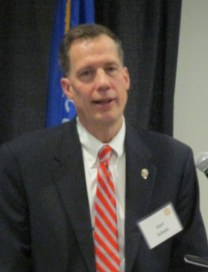
Scholz KarlIn a lively presentation, UW-Madison College of Letters & Science Dean John Karl Scholz made the case for a liberal arts education, especially when it comes from UW-Madison. However, he stressed that the University needs the input of employers and alumni to make it happen.

According to the Bureau of Labor Statistics, the average weekly earnings of people with less than a four-year degree dropped between 1979 and 2014, while those of people with a bachelor’s degree or higher rose 14.1 percent. Scholz was proud to report that the median student graduating from UW-Madison has no student debt. The almost 50 percent who do have student loans graduate with an average of $27,000 in debt. While that can be a significant factor in a new graduate’s life for several years, Scholz (an economist) compared it to an average return on investment of $500,000 to $1 million in additional earnings over a lifetime.

There are 35 departments in the College of Arts & Letters, encompassing the physical sciences, social sciences and humanities. The College offers nearly 60 percent of all credit hours at UW-Madison, according to Scholz. He noted that employers are looking for the skills and qualities that students gain in the College: a broad knowledge base, problem-solving skills, communication skills, especially writing, and critical thinking.

A recent survey of alumni who are one year out of college, or eight to ten years out, found that in general they have been successful in getting jobs. Their earnings are good, and 90 percent said they use their liberal arts education in their professional work. Scholz highlighted two recent graduates who have excelled: one becoming a Rhodes Scholar and the other a Marshall Scholar.

Outstanding research in Letters & Science includes the discovery of a new species of humans in our evolutionary history, and research projects examining the origins of the universe and international humanities. Scholz also noted that the UW Geology Museum is a gem which is visited by more than 50,000 school children per year.

Metrics for student success are good, including an average time-to-degree completion rate of 4.13 years and a 95.8 percent retention of freshmen. UW-Madison is rated ninth in the nation for best value for students.

But academic triumph has to be matched with cultivation of job and life skills in order to make students successful in their careers, particularly for first generation college students. That is why the College has launched the Letters & Science Career Initiative, which applies dedicated faculty and staff to work with alumni, employers and students. A new course for sophomores will help them reflect on their skills, define their aspirations and build on their strengths. Students will learn how to write a top-notch resume and build a professional network.

Another program, Career Kickstart, will create an immersive, residential learning community for 600 sophomores, with onsite academic advising and mentoring.

Scholz noted that no one is in a better position to help students build their professional network and succeed in a career than past graduates of UW-Madison who have done just that.  Alumni will be active in mentoring, doing informational interviews and offering internships. Scholz envisions that, through outreach and partnerships with employers, there will be more opportunities for students. UW Letters & Sciences seeks to be a “go-to place” for talent in the job marketplace.

Scholz was asked what we, as Rotarians, can do to help, and he asked us to help project the University’s success story throughout the state and beyond. He noted that state legislators will take note if they hear positive news about the university from “unexpected sources,” i.e., not university administrators.

CLICK to watch the video on our YouTube channel.
CALS Dean Tells Club of Today’s Impact and Tomorrow’s Challenges for Wisconsin Agriculture

–submitted by Jerry Thain; photo by Jeff Smith

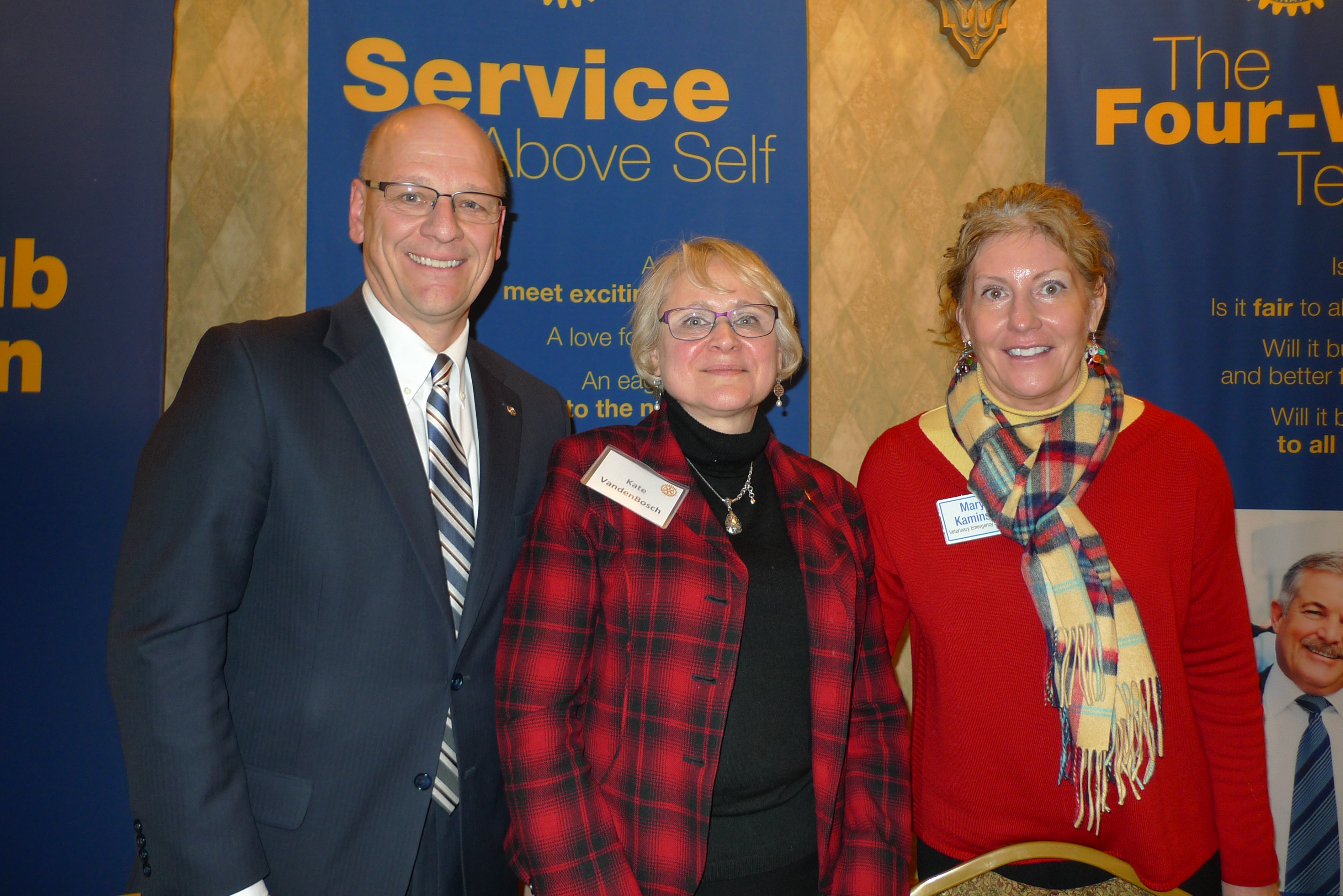
Pictured from left: Club President Tim Stadelman, Dean Kate VandenBosch and Rotarian Mary Kaminski

Pictured from left: Club President Tim Stadelman, Dean Kate VandenBosch and Rotarian Mary Kaminski

Kate VandenBosch, Dean of UW-Madison’s College of Agriculture and Life Sciences, presented a brief but far-ranging summary of Wisconsin agriculture to Club members on January 28.  She noted the efforts of Governor William Hoard to promote the dairy industry in the 1800s and the contributions of Professor Stephen Babcock who developed the butterfat test for milk in the early 20th Century.  The economic impact of agriculture in Wisconsin is huge; it composes 11% of the state’s economy, with 78,000 farms producing $88 billion in total sales. Beyond dairy products, Wisconsin agriculture is a leader in production of cranberries, potatoes, corn, snap beans and other fruits and vegetables.  Our largest agricultural export is ginseng root. Most farms in the state are family owned and operated.

As to the future, Dean VandenBosch noted the “modest goals” were to achieve greater productivity, increased nutrition, and greater variety of foods to help feed an expected world population of about 10 billion people by mid-century, while maintaining environmental stability and animal welfare.  She noted the likelihood of an increased emphasis on genetically modified crops in future years and gave examples of CALS staff and programs working toward better agriculture such as developing meats “beyond brats” to go with Wisconsin’s special artisanal cheeses and the “field to food-bank’ program that delivers surplus food to the needy.  She concluded with examples of efforts by CALS faculty and staff to improve food production and security around the globe.

The talk surely left Club members impressed with the current state of Wisconsin agriculture and the ongoing efforts to maintain and possibly improve the industry’s vitality and contributions to the state’s well-being.


Rotaract Tour and Supper, 12.01.11

Dan Larson, Chair and Jacqui Sakowski, members of the Rotaract Advisory Committee, accompanied students from Edgewood College and UW Madison on a tour of Full Compass Systems and to supper at The Imperial Garden Chinese Restaurant.

Roxanne Wenzel, VP Sales & Marketing, left above, guided the party through showrooms, recording studios, the colossal 80,000 sqaure foot warehouse and the a la carte bistro.

Johnathon Lipp, founder took the students through the history of the firm to the present day. The students were truly inspired to learn how Full Compass had bucked the recession and grown dramatically by doing the opposite of conventional business wisdom.

During a half-hour Q&A session Johnathon shared some of the downs as well as many of the ups, so everyone left with a taste of success underpinned with a good sense of the reality of managing a growing business in a fast changing industry.

Cool space, fast growing, hi-tech, rewarding, inspiring, were the words much used over a luscious buffet style meal at The Imperial Garden Chinese Restaurant.

Many thanks to Full Compass Systems and to Imperial Garden Chinese Restuarant for their time and contributions to this fun evening.

The Full Compass goody bags and cartons of Chinese food were enthusiastically apprreciated by our group.

The Rotary Club of Madison has 500 members from business, academia, healthcare and public and community service. It is one of the ten largest Rotary International clubs in the world and will celebrate its 100th anniversary in 2013. Rotary International is a service club with local and global reach. It’s 34,000 clubs in over 200 countries have 1.2 million members who meet weekly to develop friendships, learn, and work together to address important humanitarian needs.

Outstanding Fall Semesters at UW_Madison and Edgewood College Rotaract Clubs

Outstanding September meetings of Edgewood College and UW-Madison Rotaract Clubs, have set the stage for a great fall on our local campuses.

These informative and engaging meetings, are open to all Rotary Club members, and District officers, and we can all benefit from attending.

The meetings on the two campuses are slightly different in format, although both run from 7:00 to 8:30 p.m.

At Edgewood they generally have quite a bit to share about their volunteering activities before a 45-60 minute presentation from a professional from the community who challenges the audience to think differently about how they go to work. In September students and guests heard from an entrepreneur who had taken the risk of trying new ventures, she took the lessons from each as she drew a curtain over the past and moved confidently and more aware into her future, with plans not to repeat her past mistakes.

On UW- Campus  a short update on volunteering, is traditionally followed by a 10-15 minute presentation by an international student, who will share about the culture of their home country.  In September, Erman bought our friendship with Turkish Delight, which he passed around the group as he spoke. He definitely left the podium with many many new friends!  UW students were challenged to think a little less selfishly about their networking agenda in their professional presentation, and they very quickly realized that the more they serve, the more they will be served by the people in their lives.

With first class speakers, and students who lap up every drop of experience and wisdom we can share, these meeting should be unmissable.

Fall Schedule:-

UW-Madison – Grainger Hall

October 25th – Ralph Kauten, Biotech Entrepreneur, founder of Promega, PanVera, Mirus Bio and  Quintessence BioSciences.

November 15th – Ken Waysalik, International Business Consultant who works with US companies to expand their businesses into global markets.

December 6th – Tom Guerin , VP of Research & Development for Kerry Ingredients & Flavors, Americas, who travels the globe to ensure that products fit the markets they serve.

Edgewood College – Predolin Hall

October 19th – Carmen Porco, a member of our Rotary Club who will discuss community issues and answers in the works.

November 9th – Moses Altsech,  Rotarian and Edgewood College faculty will provide a workshop on creating a great resume.

November 30th – Annemarie Spitznagle, will share lessons learned in founding and operating Bloom Bake Shop in Middleton, WI.

The Rotary Club of Madison has 500+ members from business, academia, healthcare and public and community service. It is one of the ten largest Rotary International clubs in the world and will celebrate its 100th anniversary in 2013. Rotary International is a service club with local and global reach. It’s 34,000 clubs in over 200 countries have 1.2 million members who meet weekly to develop friendships, learn, and work together to address important humanitarian needs.