Monthly Archives: April 2015

Discussion on Updates to Madison’s Beltline

–submitted by Mary Helen Becker; photo by Loretta Himmelsbach
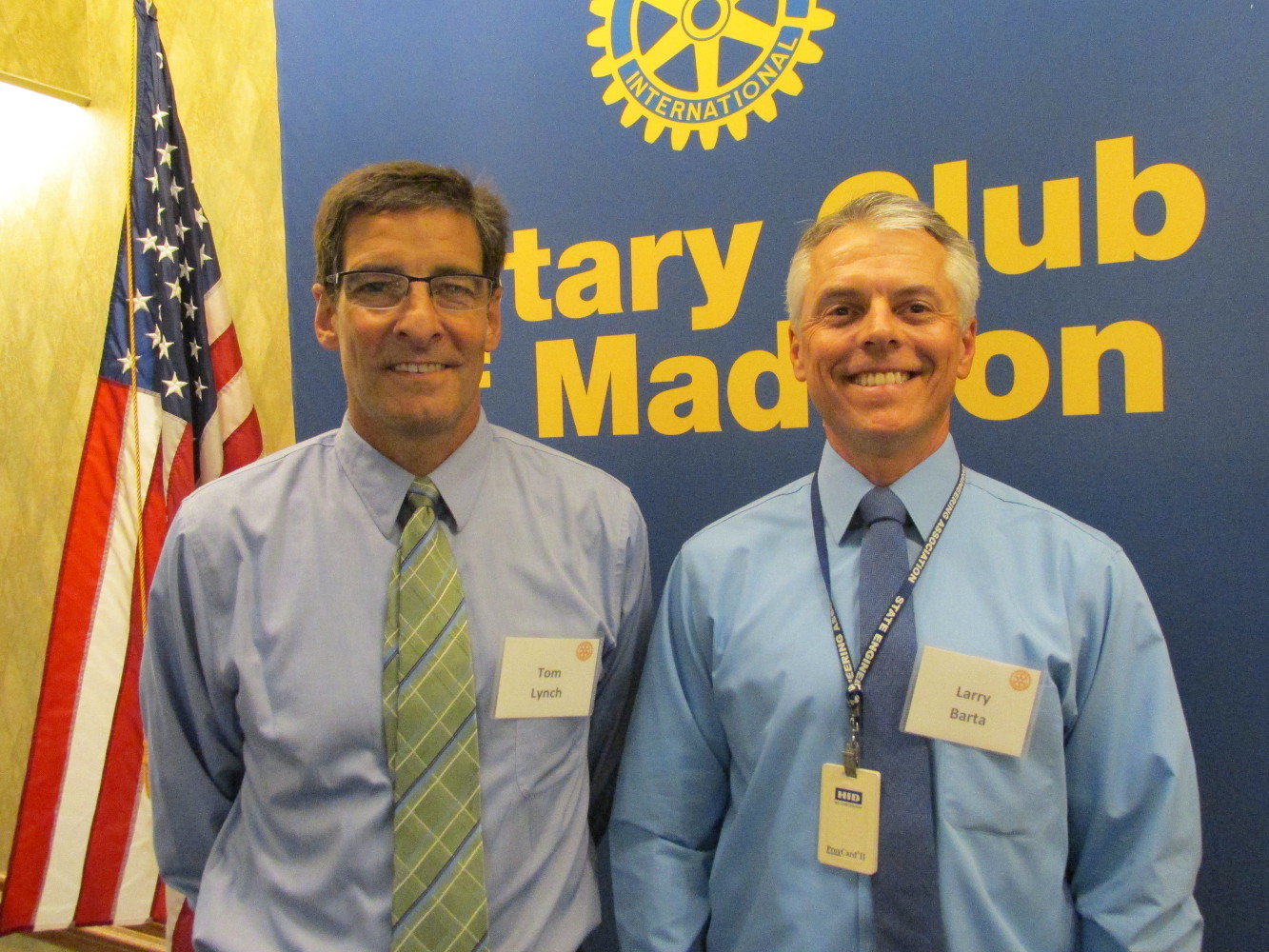
Barta Lynch 4 29 15

Two experts explained the planning and strategy for beltline improvements and changes on April 29. The first to speak, Larry Barta, has worked with the Wisconsin Department of Transportation for 31 years. He has managed improvement projects and corridor studies in all District One counties, including managing the expansion and relocation of 38 miles of I-39 from Dickeyville to Dodgeville. He began by noting that the most efficient traffic plan is the grid. In Madison, because of the lakes, we have a wheel, with heavy traffic on the “spokes” of that wheel. The beltline, which is under major reconstruction at this time, is very important and has several problems that need attention, including too many crashes, bottlenecks, and its age — it is simply too old. Half of the traffic exits are just 4 interchanges. New corridors on the northside of the city, including the North Mendota Parkway and a Waunakee corridor are important. Each day the Verona Road section handles 125,000 vehicles a day. An alternate route between Verona Road and I-90, south of the city, has been suggested, but the cost and impact make it impractical method of removing traffic. Alternate modes of transportation including bus rapid transit, express routes and commuter rail are being considered. Commuter rail through the isthmus and out University Avenue could remove some traffic from the Beltline. The DOT is working with Madison Metro, a separate entity, to plan improvements.

The second speaker, Tom Lynch, has been with Strand Associates for 23 years. He focuses on major corridor studies and environmental impact studies. He discussed “scenario” planning and explained “Madison in Motion” and the Sustainable Transportation Master Plan, including current plans and trends. Bus rapid transit and beltline bus riders could reduce beltline volume. Studying how people travel is important. Increasing use of public transit and bike use could be significant on the isthmus, but less so on the beltline.  The issue is important to all citizens and is being studied and addressed.
Culinary Arts Group Enjoys Cuban Meal at Maple Bluff

–submitted by Paul Hoffmann

photo 6

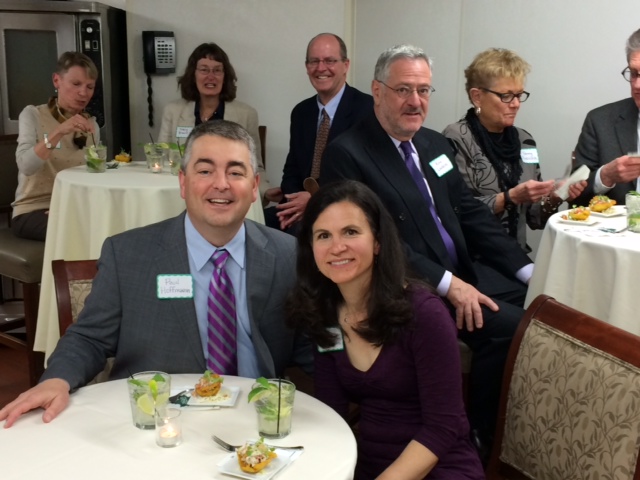
Paul and Sharon Hoffmann

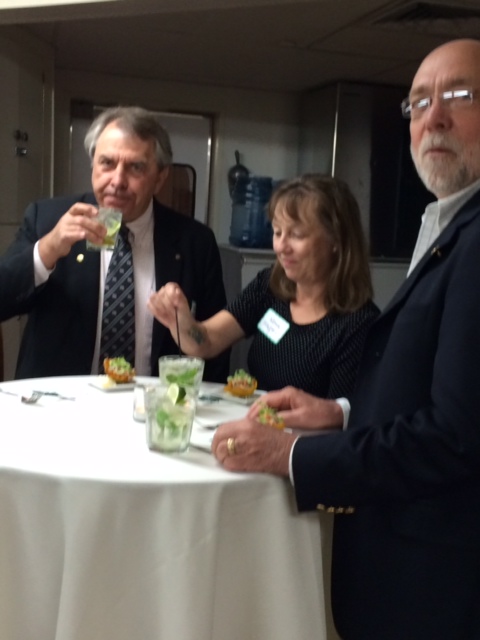
The Rotary Culinary Arts Fellowship event at Maple Bluff Country Club on April 23 was a night of lively conversation over a delicious Cuban themed four course meal.

The evening started off with a glass of wine of choice to enjoy while everyone was arriving. A little Cuban background music set the mood and it gave us time to meet the other Rotarians and guests.

photo 7

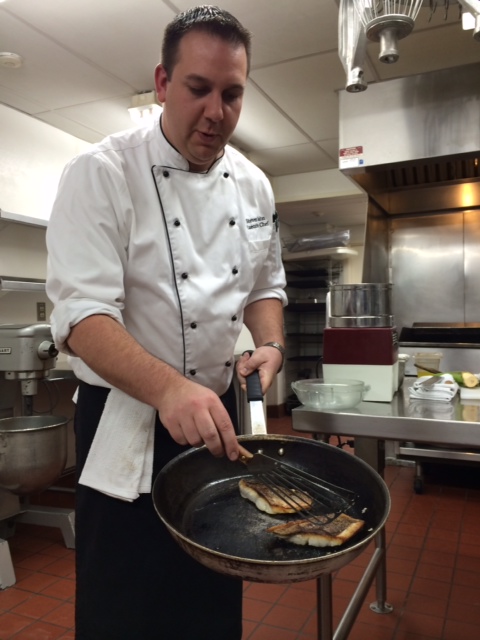
Executive Chef Steve Hahn

Once everyone was gathered together and introductions were made we were escorted to the kitchen for a cooking demonstration by Le Cordon Bleu trained Chef Steve Hahn who recently returned from a Caribbean trip. The chef prepared a quick appetizer of conch and plantains served with a refreshing mojito. The Chef demonstrated how the main course of red snapper was going to be prepared. It was pan seared and then topped with a shrimp and coconut mousseline which was slightly baked.

After the demonstration, the first course of conch fritters was served back in the dining room which has a beautiful view over Lake Mendota towards the Capital. The next course was a smoked tomato gazpacho soup topped with avocado infused foam. The main course was the red snapper mousseline with rice and beans. The final course was a dessert of flan with a guava puree and thinly sliced peaches. The evening was a great way to get to know other Rotarians.

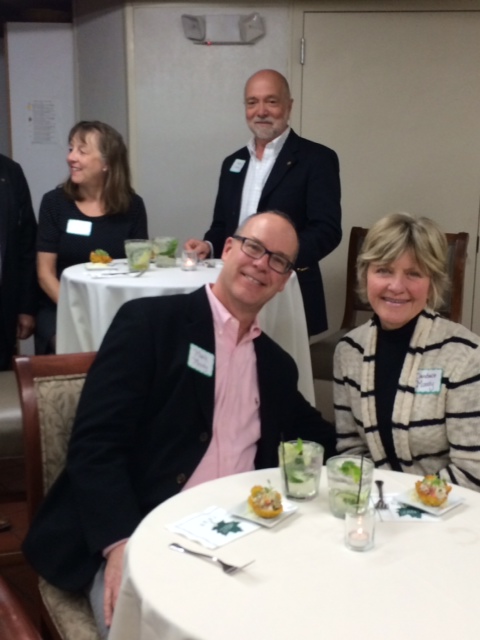
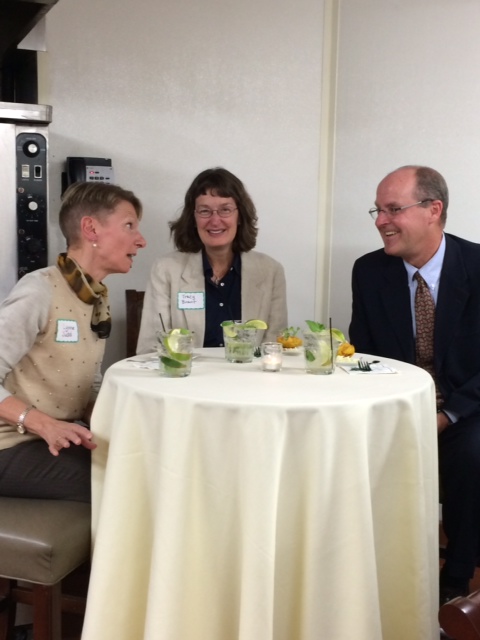
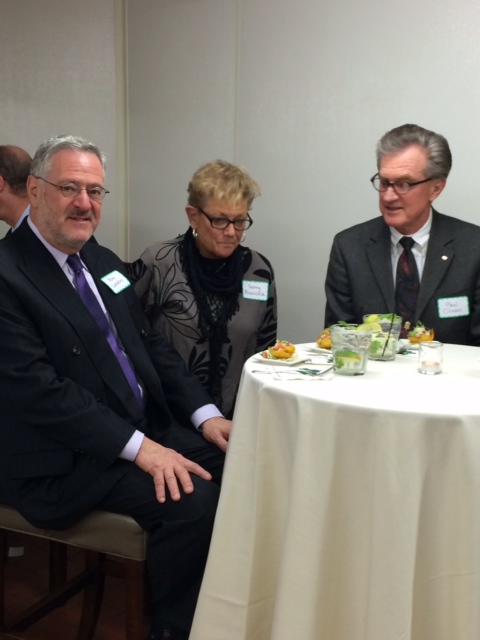
photo 5   photo 1   photo 2   photo 3

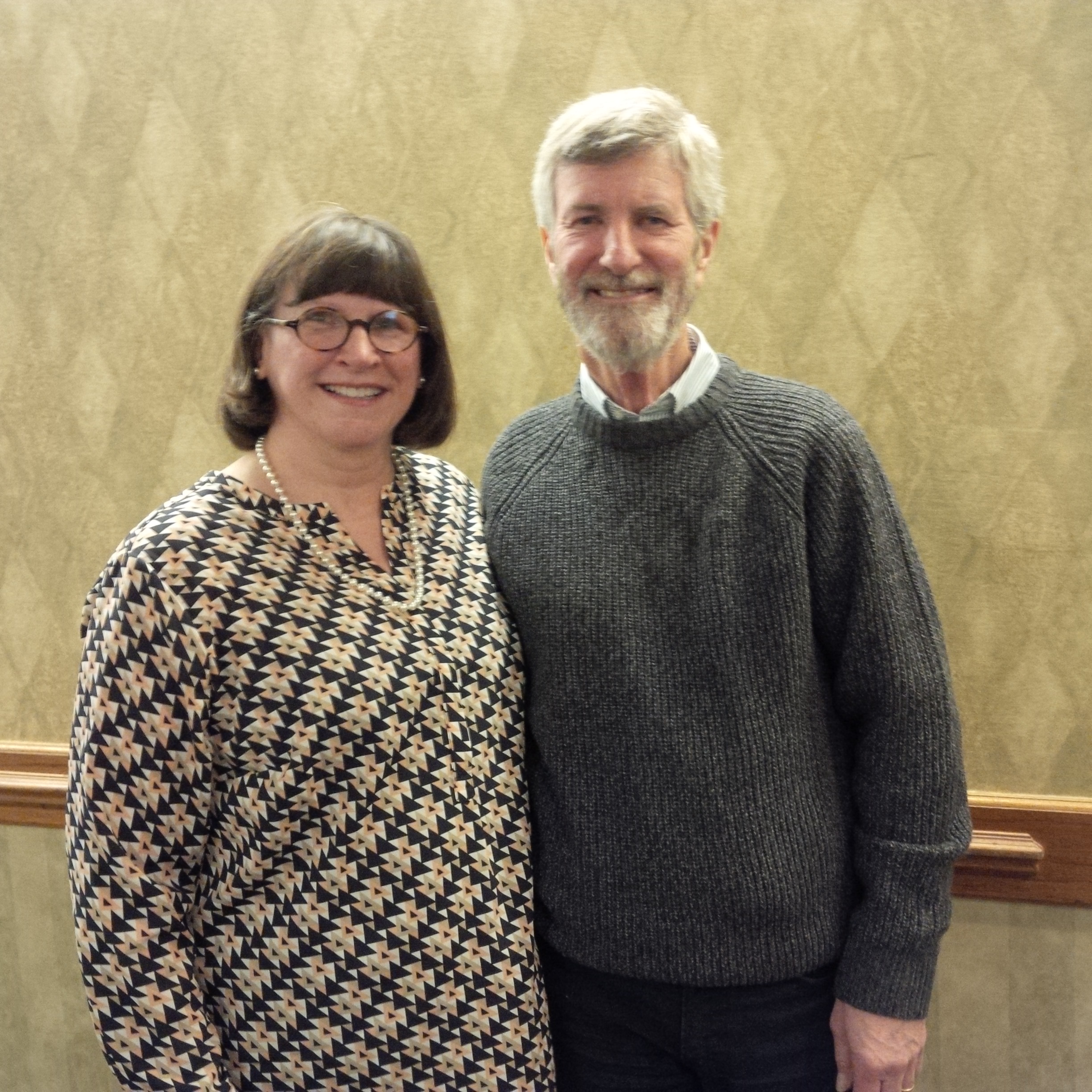
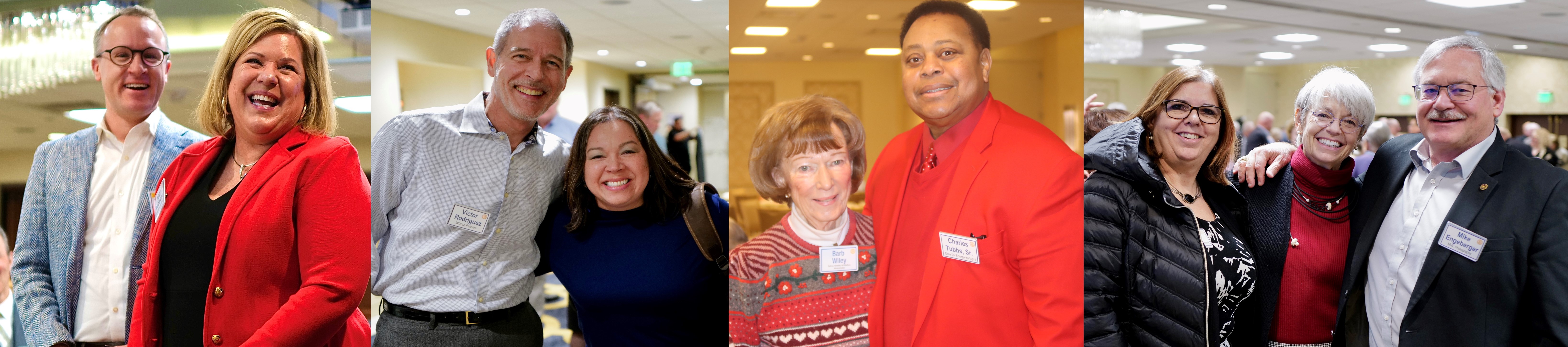
Photo 1: Mark & Candace Moody; Photo 2: Lynne Judd, Tracy & Mark Brant; Photo 3: Ron Luskin & Terry Ruzicka, Paul Olsen; Photo 4: Dan Dieck & Nona Hogan, Roth Judd

If you enjoy special dining experiences, please consider joining the Culinary Arts fellowship on their next food adventure.

Have the Conversation and Do It Now…

–submitted by Linda Baldwin; photograph by Loretta Himmelsbach

IMG_0265

Jim Jaeger and Sandra Nuernberg urged all Rotarians and guests to begin the process of planning for future medical care.  Jaeger and Nuernberg represent the Association of Spiritual Caregivers working with Meriter Foundation and the Gundersen Medical Foundation in La Crosse.

All of us have likely thought about end of life care; some of us have created a living will or other advance care document.  But how many of us have had the “conversation” with our family, friends and agents about end of life care?   60% of people say that making sure their family is not burdened by tough decisions is extremely important, but 56% have not communicated their end of life wishes.

Jaeger and Nuernberg showed a video about a couple who were having the conversation.   Benefits include peace of mind, putting your family at ease about what decisions to make for you when you are unable, having an agent to represent you who is willing and capable of advocating your wishes on your behalf.  And knowing what you want done at end of life will potentially save money and extend life by taking the pressure off.

Jaeger noted that Advance Care Planning is a process, beginning with you and others understanding that decisions will need to be made in the likely event you will not be able to do so.  Next you need to reflect on what you do want to happen, then have a discussion with loved ones, medical advisers and agents about your wishes.   Those choices will be written down and then this should be part of your medical record.

Also, plan to review this document over time as your situation may change and you may want to alter your plans.  There are resources and organizations to help you have “the conversation”.   For an information booklet answering commonly asked questions about advance care planning, contact Gundersen Health System,
La Crosse, WI 800-362-9567, ext. 56748.

Next in Madison: StartingBlock Madison

–submitted by Larry Larrabee; photography by Loretta Himmelsbach

Austin Reed Wolter

George Austin (center), Madison’s former Planning and Development director and President of AVA Civic Enterprises Inc., provided the introduction about what StartingBlock Madison is planning to do to encourage, develop and grow entrepreneurs by bringing them into an entrepreneur hub that will place them in contact with peers, mentors, investors and consultants.

The building will be located in the 800 block of East Washington Avenue and American Family Insurance is funding the construction of the first 50,000 sq. ft. phase of a 160,000 sq. ft. building.

Founded in 2012, StartingBlock Madison is dedicated to encouraging entrepreneurs, growing Madison’s economy and providing educational opportunities regarding entrepreneurism.  It will be able to do this because of the strong support of MG&E Energy and American Family Insurance.

Dan Reed (left), Managing Director of American Family Ventures, spoke about his company’s investments in new technology companies in areas like automobile safety through their Direct Venture Capital program.  Their support of StartingBlock Madison is an extension of this concept.

Gary Wolter (right), Chairman & CEO of MGE Energy Inc., sees StartingBlock Madison as expanding the Madison entrepreneurship environment and helping to grow the economy.  He explained the stretch goal as “how can I change the world?” and sited those Madison entrepreneurs that have done that such as Jamie Thompson’s Cellular Dynamics, Pleasant Rowland’s American Girl and Judy Faulkner’s Epic.

The positive response to the three presenters and the concept of StartingBlock Madison that represents the combined efforts of corporate, educational, and civic entities including the City of Madison suggests StartingBlock and the entrepreneurs it cultivates are sure to be successful.

We would like to thank Madison City Channel for videotaping our meeting this week.  The program will be rebroadcast on analog basic channel 98, digital channel 994 & AT&T U-verse 99 as follows: Friday, April 17 at 8 PM; Wednesday, April 22 at Noon; Friday April 24 at 5 PM; Sunday, April 26 at 5 PM.  You can also watch this program on the WEB.

First Hike of the 2015 Season – Aldo Leopold Nature Center in Black Earth

–submitted by Dawn Crim; photography by Karl Gutknecht

1 ALeopold_Hike

On Saturday the Hiking Fellowship Group enjoyed its first hike of the season organized by Rotarian Karl Gutknecht with Bob Miller,  President and Executive director of the Aldo Leopold Nature Center, and board member and Rotarian Deb Gilpin on hand at the Black Earth location. What a wonderful way for over 25 Rotarians and friends and two dogs to welcome spring! Bob provided background on the 38 acre site in front of the Leopold Lodge that can be rented for camping trips, meetings,etc. An excellent location for our group photo too.

Aldo Leopold 5

The site has wonderful hiking trails. We hiked the first loop, about 1.5 miles consisting of mature woods, and rocky outcroppings. This path had somewhat steep terrain that took us high in the treetops before winding down into the valley. Once at the bottom, Bob shared stories of several scouting troops who rent out the site to test for hiking badges and other camping adventures.  We embarked on the second loop which was about 1 mile. This path was not as steep as the first and had a fire pit and council ring at the top.

Aldo Leopold 6  Aldo Leopold 7  Aldo Leopold 3

Our hike concluded with a picnic lunch on the wooded deck of the Alexander Studio. The studio has high cathedral ceilings, a center stage and originally served as a rebirthing center in the early 1970’s.

It was a beautiful day and great location to kick off the hiking season. Bob invited us all to visit the Monona Aldo Leopold Nature Center later this summer.

Aldo Leopold 1


Autism Research and Treatment in Wisconsin

–submitted by Carol Toussaint; photo by Loretta Himmelsbach

Graupner Sallows 4 8 2015What is autism and why do we read and hear so much more about it today than even a few years ago?  Drs. Glen Sallows and Tamlynn Graupner addressed that question for the Rotary audience Wednesday, April 8.  They  explained that research such as they are engaged in has added to the understanding of the causes and interventions which means even mild cases are now included in the statistics.

Speaking in tandem, raising questions and responding to the symptoms that trigger parents, teachers and physicians to look for autism (ASD), the speakers noted that “everyone looks for it now” so, of course, it is more  prevalent.  Not that long ago it was thought that between two to five of every 10,000 patients were diagnosed with ASD.  Fewer people were looking for it because no one thought there was a treatment.  Now it is estimated that there are 1 in 108 people in Wisconsin with ASD and reporting is more accurate  because of both research and improved methods of record-keeping.

The news that autism, characterized by symptoms of delayed social language, delayed social interaction and repetitive/unusual interests, can be diagnosed at 12 months or even younger is the key to successful treatment.  That about half of treated children improve to the average range, understanding language, improve on behavior and self care, and most will speak, is positive news.

Dr. Sallows is cofounder and President of the Wisconsin Early Autism Project (WEAP) and has been working in the field of autism for over 25 years.  Dr. Graupner is cofounder  and CEO of WEAP and her research through the UW Waisman Center involves studying the brain bases of the symptoms of autism.  Both are dedicated to continuing to find new ways of addressing autism.  If that results in reporting a higher incidence of ASD, it does not mean an epidemic.  It will mean more attention to and perhaps improved means of intervention at a younger age.