First Hike of the 2015 Season – Aldo Leopold Nature Center in Black Earth

–submitted by Dawn Crim; photography by Karl Gutknecht

1 ALeopold_Hike

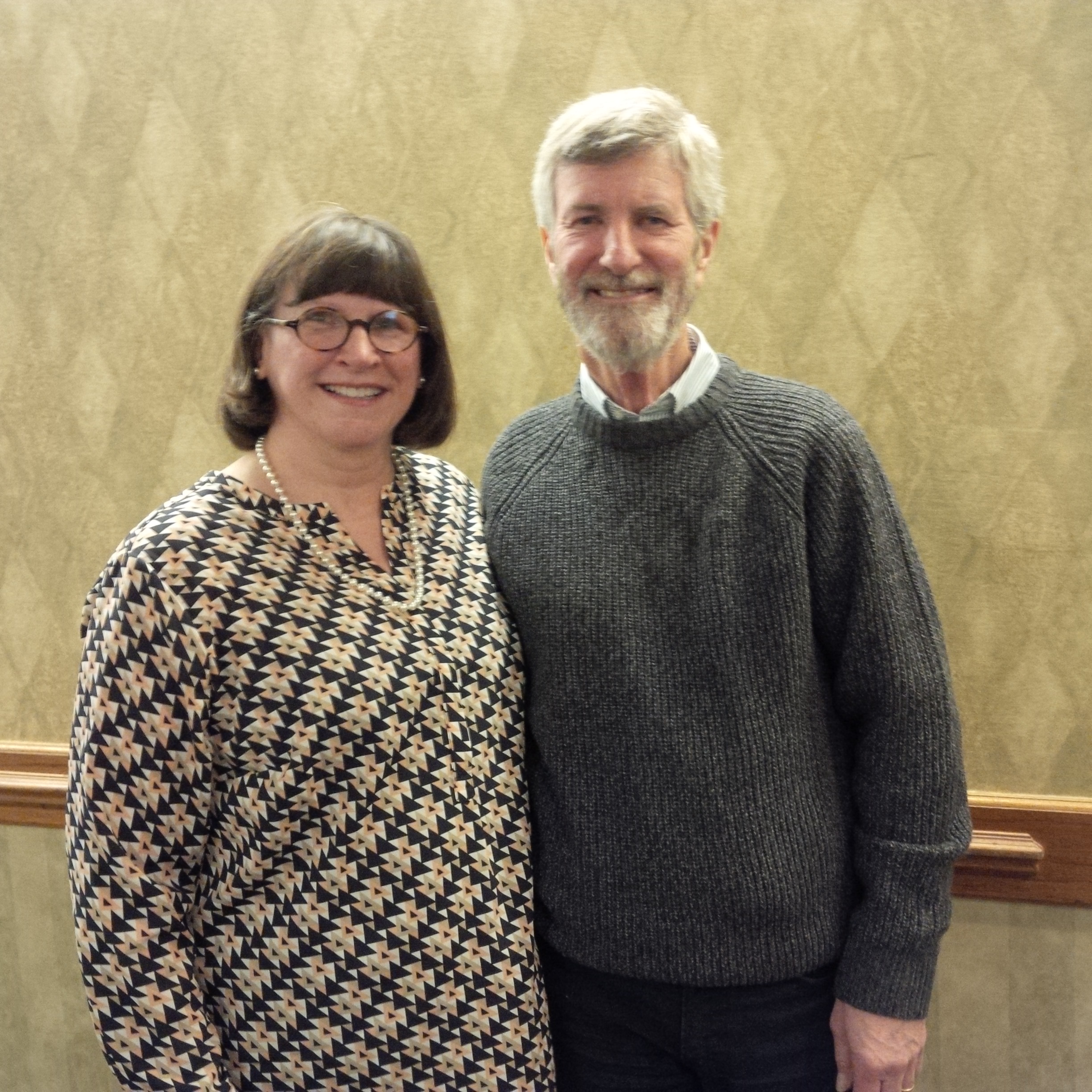
On Saturday the Hiking Fellowship Group enjoyed its first hike of the season organized by Rotarian Karl Gutknecht with Bob Miller,  President and Executive director of the Aldo Leopold Nature Center, and board member and Rotarian Deb Gilpin on hand at the Black Earth location. What a wonderful way for over 25 Rotarians and friends and two dogs to welcome spring! Bob provided background on the 38 acre site in front of the Leopold Lodge that can be rented for camping trips, meetings,etc. An excellent location for our group photo too.

Aldo Leopold 5

The site has wonderful hiking trails. We hiked the first loop, about 1.5 miles consisting of mature woods, and rocky outcroppings. This path had somewhat steep terrain that took us high in the treetops before winding down into the valley. Once at the bottom, Bob shared stories of several scouting troops who rent out the site to test for hiking badges and other camping adventures.  We embarked on the second loop which was about 1 mile. This path was not as steep as the first and had a fire pit and council ring at the top.

Aldo Leopold 6  Aldo Leopold 7  Aldo Leopold 3

Our hike concluded with a picnic lunch on the wooded deck of the Alexander Studio. The studio has high cathedral ceilings, a center stage and originally served as a rebirthing center in the early 1970’s.

It was a beautiful day and great location to kick off the hiking season. Bob invited us all to visit the Monona Aldo Leopold Nature Center later this summer.

Aldo Leopold 1


Autism Research and Treatment in Wisconsin

–submitted by Carol Toussaint; photo by Loretta Himmelsbach

Graupner Sallows 4 8 2015What is autism and why do we read and hear so much more about it today than even a few years ago?  Drs. Glen Sallows and Tamlynn Graupner addressed that question for the Rotary audience Wednesday, April 8.  They  explained that research such as they are engaged in has added to the understanding of the causes and interventions which means even mild cases are now included in the statistics.

Speaking in tandem, raising questions and responding to the symptoms that trigger parents, teachers and physicians to look for autism (ASD), the speakers noted that “everyone looks for it now” so, of course, it is more  prevalent.  Not that long ago it was thought that between two to five of every 10,000 patients were diagnosed with ASD.  Fewer people were looking for it because no one thought there was a treatment.  Now it is estimated that there are 1 in 108 people in Wisconsin with ASD and reporting is more accurate  because of both research and improved methods of record-keeping.

The news that autism, characterized by symptoms of delayed social language, delayed social interaction and repetitive/unusual interests, can be diagnosed at 12 months or even younger is the key to successful treatment.  That about half of treated children improve to the average range, understanding language, improve on behavior and self care, and most will speak, is positive news.

Dr. Sallows is cofounder and President of the Wisconsin Early Autism Project (WEAP) and has been working in the field of autism for over 25 years.  Dr. Graupner is cofounder  and CEO of WEAP and her research through the UW Waisman Center involves studying the brain bases of the symptoms of autism.  Both are dedicated to continuing to find new ways of addressing autism.  If that results in reporting a higher incidence of ASD, it does not mean an epidemic.  It will mean more attention to and perhaps improved means of intervention at a younger age.

Wisconsin is Open for Business

–submitted by Bob Dinndorf; photo by John Bonsett-Veal

KleefischLieutenant Governor Rebecca Kleefisch discussed our State government’s commitment to making Wisconsin a great place for employers, entrepreneurs, small businesses and workers through tax relief and especially job training.

The Lt. Governor is a former small business owner and news reporter. Widely credited for coining the phrase, “Wisconsin is Open for Business,” LG Kleefisch has played a key role from day one in business growth and retention in Wisconsin.

As Wisconsin’s “Jobs Ambassador” and leader of the Governor’s Small Business Summits and Tax Reform Roundtables, Lt. Gov. Kleefisch touched on a range of topics that could be characterized as “overcoming adversity.” She opened with her personal story about how she staged her run for the Lieutenant Governor’s seat. Rejected by her own party as a candidate, she ran in the 2010 primary against three opponents. At that same time, she was diagnosed with colon cancer. Still hospitalized on Election Day, she was released to vote on the condition that she return for continuing treatment. She did and won on two fronts: the election by 21 percentage points and successful treatment of her cancer.

In terms of overcoming economic adversity, the Lt. Gov. quoted a Wall Street Journal headline: “Uncertainty is the enemy of recovery” as a means of characterizing the Wisconsin approach to economic recovery. She stated “we’ve given families and businesses certainty” and cited several measures illustrating that result in Wisconsin unemployment at 4.8%; 156,000 people have gone back to work and that local property taxes have been lowered.

A continuing issue is the skills gap in Wisconsin that prevents many jobs from being filled. She asked Rotarians to check out the website http://www.jobcenterofwisconsin.com which displays 84,915 jobs are unfilled in Wisconsin at the time of the Rotary meeting (the number had increased to 85,206 less than an hour following our Club’s meeting as this summary was being written). The site will be enhanced soon to add even more job postings aggregated from other sites. As part of the solution, she said “Wisconsin has a fantastic technical college system.” Ultimately, the goal is about fulfilling our State motto: Forward!

Our Proposed Enactment – “…subject to two or more inconsistent meanings” ??

–submitted by Paul Riehemann and Karen Kendrick-Hands

Going Green Logo

We received a reply from Rotary International on the Going Green Fellowship Group’s (GGFG) Proposed Enactment which was endorsed by the District.  It’s not good.

The Proposed Enactment asks that Clubs and RI be able to support the reduction of greenhouse gas emissions to mitigate the global warming humanitarian crisis.

=====================================================

Letter to the District from RI’s Constitution and Bylaws [C&B] Committee –

2016 Council on Legislation: File 163-E.  Excerpts:

The Committee has tentatively determined that file 163-E, proposed by the Rotary Club of Madison, is duly proposed, but defective under RI Bylaws section 7.037.2:

(a) it is subject to two or more inconsistent meanings

If the RI Board agrees with the Committee’s determination as to the status of your proposed legislation, it will not be transmitted to the 2016 Council for consideration. Even if it is transmitted to the Council, a member of the Constitution and Bylaws Committee may comment at the Council that the proposed legislation has been determined to be defective.

In their review of the legislation, the Committee made the following comments:

During its review of file 163, the Committee believed that this proposed
change would be inconsistent with the constitutional documents, as it could be
considered political in nature and would be in conflict with article 13, sections
1 and 3 of the Standard Rotary Club Constitution.

You may wish to be aware that the deadline to submit amendments to proposed legislation is 31 March 2015. Please respond with any amendments to your legislation as soon as possible.

=======================================================

District 6250 Reply –

With the support of many District and Club leaders, District Governor Dave Warren forwarded this REPLY.  Excerpts:

  • “It appears that the Constitution and Bylaws [C&B] Committee’s declaration of File 163-E-D to be defective was in error and contrary to Rotary International’s governance procedures.”
  • “The C&B Committee has furnished no evidence or basis for the proposal’s susceptibility to two or more inconsistent meanings.  That finding, we believe, is incorrect.
  • “To bring its decision into compliance with RI’s governance procedures and to render an action that is “Fair to All Concerned”, Rotary District 6250 urges the C&B Committee to reconsider and alter its “tentative” action on File 163-E-D to advance the District 6250’s proposal for consideration at the 2016 Council on Legislation.”
  • “District 6250’s Going Green Fellowship Group proceeded precisely as then President Elect Gary Huang advised when he spoke at the Rotary Club of Madison, saying that initiatives in Rotary “must begin with the club.”  We are deeply disappointed that the C&B Committee is considering keeping our duly proposed and endorsed enactment from reaching the 2016 Council on Legislation for their consideration.”

=======================================================

RI Response –

The Committee will review and discuss your letter at their April 28-29 meeting. Based on the results of that discussion, the Committee would be able to extend the deadline for amendments, to allow your district time to address any concerns.

—————————————————————————————————-

We’re confident that the C&B Committee and Rotary will follow the Four-Way Test here.  We are not going to make any amendments at this time since we don’t have any feedback on the concerns raised.

Political?

The Proposed Enactment asks for an exception to Rotary’s non-political stance to fully empower RI and Clubs to support the reduction of greenhouse gas emissions to mitigate the global warming humanitarian crisis (GWHC).  Some believe that the GWHC is not political.  Under these dictionary definitions of “political” we believe action on the GWHC is political, as is Rotary’s successful campaign to assist in the eradication of polio.

po·lit·i·cal

  1. relating to the government, the state or the public affairs
  2. of or relating to citizens
  3. having a definite policy

Additionally, some solutions will require legislation – see the Group’s Open Letter.

We’re heartened by the support of so many in District 6250 and our Club and will keep you posted.

LARGE-IMPACT SERVICE PROJECT PROGRESS

LARGE-IMPACT SERVICE PROJECT PROGRESS
–submitted by Renee Moe, Chair of Large-Impact Service Project Task Force 

Five years ago, our Board of Directors charged the Club with identifying four areas of service. For the past two years, the Club has been engaged in planning and member engagement around our large-impact service project, including member surveys, visioning session, and other meetings.

Last year, our Service Committee Chairs cataloged our existing service into three areas: Basic Needs, Education and Mentoring and Civic Leadership. This year, the Club has embarked on identifying a large-impact service project utilizing additional member input and engagement.

The Board has asked an ad hoc large-impact service committee to make a recommendation for the June Board meeting, aligning around the charge: Rotary Club of Madison shall become a LEADER in building a strong, diverse but unified, and sustainable Madison community.

Through a series of meetings, the Equity Ad Hoc Committee made a project recommendation which focuses on adult employment and mentoring which was accepted by the Large Impact Project Ad Hoc Committee. The Committee would also like consideration of a youth/education/mentoring/internship component. Both will allow our Club to become a leader in building a strong, diverse but unified, and sustainable Madison community, AND provide many opportunities for a large number of Rotarians to be directly involved in service.

There are many details to be worked out, including defining scope and scale; communicating with and hearing from members to foster Club-wide engagement in the education/volunteerism/operations of the project; learning more about what is currently happening in the community in these areas; getting feedback from external stakeholder groups also working in these areas (so we can be complimentary and supportive of community-wide initiatives); identifying measures of success/timelines/committee support; and more.

This blog post is to update you and the larger community about our progress, and to thank you very much for your participation in our all-member surveys, many meetings, and Centennial vision session. We are making progress! There will be more opportunities to learn about and influence our large-impact service in the coming weeks and months! Thank you for your Service Above Self.


Bradley vs Daley

–submitted by Mark Stover;  photo by Mike Engelberger 

Bradley AW  Daley J

On April 7, Wisconsin will do what it has been doing since 1848: hold an election where the people of the state choose who will sit on the State Supreme Court.  This election is between James Daley of Janesville and Justice Ann Walsh Bradley of Wausau.  Justice Bradley is the incumbent and has been on the Supreme Court for 20 years.  Judge Daley, the challenger, has been a judge for 26 years.  Both are natives of Wisconsin.

Through a series of opening statements, structured questions, and closing statements, Rotary Club members got a chance to understand more about the positions of each of the candidates.  When asked what qualities distinguish each candidate, Judge Daley mentioned he was a Vietnam-era veteran.  He retired as a Brigadier General from the Wisconsin National Guard.  He helped start the first veterans’ court in the state.

Justice Bradley pointed to her dedication to protecting a fair and impartial judiciary.  She noted her concern that out of state money funding media supporting one candidate over another introduces a dangerous potential for questioning impartiality of the judiciary.  Justice Bradley suggested that what is needed most in a judge these days is the courage to act independently.

The candidates agreed with each other that transparency of process in the Court’s administrative hearings should increase making those hearings more open to the public.  They also opposed the idea of appointing Supreme Court Justices, each agreeing that the election process was the better route.  Justice Bradley believes the election system should continue to be improved to be the best it can be.  Judge Daley argued that elections should extend to the election of the Chief Justice by the other Justices.

In closing, Judge Daley said he was running because he was unhappy with the decisions made by Justice Bradley over the last 20 years.  He cited cases that he said put roadblocks in the way of law enforcement and made it harder to do business in the State of Wisconsin.  Justice Bradley argued that Chiefs of Police, Sheriffs, and District Attorneys support her because of her work in support of law enforcement.  She again raised her concerns about the apparently increasing partisanship on the Supreme Court and the effect it has on the perception of fairness and independence of the state’s highest court.

In the end, you and your friends, family and professional colleagues will have the final say – as Wisconsinites have been voicing since the state’s founding.  Please vote on April 7.