
submitted by Jessica Giesen; photo by Mike Engelberger

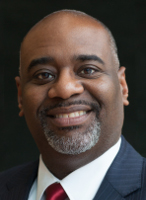
Dr. Jack Daniels pictured here with Club President Andrea Kaminski
On November 6, Madison College President Dr. Jack Daniels presented an inside look into the first 60 days that the Madison College Goodman South Campus has been open. The campus has achieved a great deal during its opening months. Bringing access to higher education to where it is needed; the campus is successfully breaking down barriers that students have faced in trying to achieve higher education. The campus is open seven days per week and offers programming every single one of those days. Madison College’s Truax campus has posed significant barriers for many in the community due to its location – for community members who live in the south Madison corridor, it can take up to an hour and a half to reach the Truax campus using public transportation, which rules out higher education for many for transportation reasons alone. The Goodman campus offers access to those who did not have it before. Out of the 2,000 students currently enrolled at the Goodman campus, 600 of them are new students – students who have never been accessed higher education before. Achieving greater access is a tremendous win for the Goodman campus and will continue to be a top priority for the campus as it continues to grow.
Dr. Daniels also gave an insight into the building itself – which incorporates art and cultural influences from four of the most represented cultures in the south Madison corridor—African American, Latinx, Hmong and Native American. Custom and representative artwork from those cultures lines the hallways and artifacts donated by community members are displayed prominently throughout the campus. In addition to educational programs, the campus also offers services ranging from counseling to housing to recording expungement. Moving forward, the campus hopes to continue to develop its range of programming and community partnerships so that it can be a catalyst for economic development into the future.
If you missed our meeting this week, you can watch the video here.



 Andy and Dee J. Hall took turns Wednesday telling Rotarians about the mission and accomplishments of The Wisconsin Center for Investigative Journalism, the nonprofit and nonpartisan organization they co-founded in 2009. The Center’s three guiding principles are displayed prominently at the top of its website, WisconsinWatch.org: PROTECT THE VULNERABLE · EXPOSE WRONGDOING · EXPLORE SOLUTIONS. An independent media group such as theirs is necessary, the Halls argue, because traditional media outlets like newspapers are weakening and dwindling and “no news is bad news for our democracy.” The Center has won many awards for its rigorously fact-checked investigative journalism and is increasing the reach of its work through an extensive paid internship program. To date, 48 former interns and fellows have moved on throughout the country and the world using skills and insights they gained at the Center. The Halls cited stories from Wisconsin exposing human trafficking, inmates in solitary confinement (in one case 27 years in a cell the size of a parking space), and concerns about football concussions as examples of the kinds of investigations their Center can conduct free of pressure to make a profit.
 Karen Menendez Coller, Centro Hispano of Dane County Executive Director, shared how recent policies affect the Latino community.
 Rotary Club of Madison, Wisconsin