Category Archives: Rotary Club of Madison Guest Speaker

The Forward Festival

–submitted by Mary Helen Becker; photo by Will Anzenberger

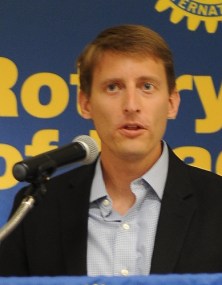
Younkle Matt 8 17 16.Matt Younkle, the inventor of Turbo Tap, a device which enables craft beers to be poured quicker and more efficiently, described this year’s Forward Fest, which will take place from Aug. 18 to Aug. 25 in various venues around Madison, including the Madison Children’s Museum, MMOCA, the Madison Central Library, and the Wisconsin Institutes for Discovery. In 2010 he co-founded the Forward Technology Conference. In a few short years it has grown to the 44 events available this year.

Open to the public, the Forward Fest emphasizes cross-connection, promotion, and opportunities to interact with others. The goal is to make Madison the best place possible to start a business. Several companies are sponsors, and the event is produced by many volunteers.

They support coworking, a way for a new business to have an address and a place to work. Young companies are the primary sources of new jobs. Rotarians were given a schedule of events which undoubtedly features something of interest to everyone!

Did you miss our meeting this week?  Watch it online HERE.

Be Yourself, Everyone Else is Taken

–submitted by Linda Baldwin; photos by Will Anzenberger

Good, Better, ____.   Never let it _______.  ‘Til your Good is _________.  and your Better is _________.  Fill in the blanks from Carl Olson’s presentation this week.

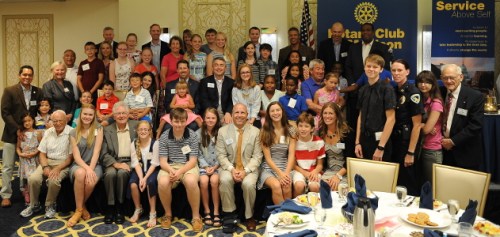
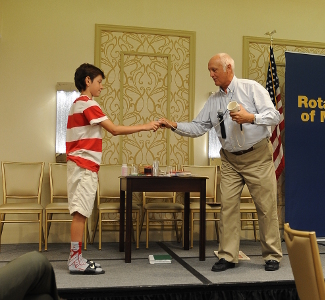
Carl, “our bring your kids to Rotary today” speaker was a terrific hit with all, young and old.  Clap Once.

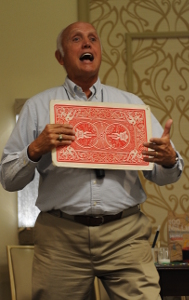
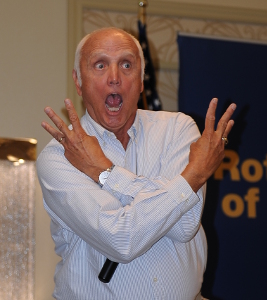
He’s a motivation speaker, magician and all around positive guy with this message…Young folks can be whatever they want to be…with self confidence, being around great folks and being ready to take on the world.  Clap twice.

He entertained us with a message…with card tricks, fire in a book, and best of all, the magic plastic glass…Clap 3 times.

Check out the photos that follow.  Sorry you missed it.

And if you missed our meeting this week, watch the video here.

RDM_8166  

RDM_8223  RDM_8214  RDM_8207

RDM_8233  RDM_8245

The UW in the 1960s

–submitted by Rich Leffler; photo by Will Anzenberger

Stu Levitan (2)Stu Levitan offered an impressionistic, kaleidescopic, sprightly, and, most importantly, insightful history of the UW in the tumultuous 1960s. He began with an aerial photo of the campus in 1962. No Humanities Building, no Elvehjem Museum, no Vilas Hall, Helen C. White, Sellery, Ogg, and Witte halls. All were added during the 1960s as the campus burgeoned.

He mentioned people who were students at the time: Dick Cheney, Tommy Thompson, Jim Doyle, Ed Garvey, Shirley Abrahamson, David Prosser, Barbara Crabb, Paul Soglin, David Maraniss, Andrew Goodman (for one semester), Steve Ambrose, Dave Zweifel, Ben Sidran, Pat Richter]and Joyce Carol Oates. They became leaders in their professions and some still are. Stu also spoke of the people who shaped the decade (and Stu holds a minority view among historians that it is individuals who make history): the aforementioned Soglin, the great Fred Harvey Harrington (who as president “super-sized” the UW), Robben Fleming, William Sewell, Ed Young, Milt Bruhn, Richter, Ron VanderKellen and Crazy Legs Hirsch.

But the sixties are remembered for one big thing: the student anti-war activism. The origins of that activism were, said Stu, in the civil rights movement of the late 1950s and early 1960s, when students went down South at considerable risk to fight against racial segregation. They demonstrated a deep “level of commitment and fearlessness.” Students who challenged the Klan were not intimidated by university administrators. Antiwar activism was, “to a considerable extent shaped” by the civil rights movement. When the first sit-in took place to oppose the draft, it was to protest student deferments that increased the exposure of non-students–the poor and minorities. Resistance to the war, though it had an element of self-interest, was also driven by principle. Peaceful resistance yielded to the Dow “riot” in fall 1967, which Stu called “the single most important political event of the decade. It marked the end of the summer of love and the start of the days of rage.” There was a cost to all this: the Regents, once defenders of the university, “took the lead in attacking” students, faculty, and administrators. The UW lost support among the people of Wisconsin, support that is still not recovered. When Stu asked an activist if the demonstrations were worth it, he answered that the more important question is were the demonstrations necessary? Stu is still working on the answer to that question. Watch for his conclusion in his book to be published next year by the Wisconsin Historical Society Press.

Did you miss our meeting this week?  Watch the video HERE.

Animals Need Heroes Too

–submitted by Stan Inhorn

_DSC9187

Dr. Mark Markel, Dean of the UW School of Veterinary Medicine (SVM) described the current status of the School, as well as the plans for expansion currently underway. One of the newer veterinary schools in the U.S., the SVM has become one of the premier schools in the country. During the past 10 years, the SVM has been rated in the top five research schools in the country. The SVM is particularly known for its research in infectious diseases – viral, bacterial, and parasitic.

The SVM is also highly rated for its teaching innovations. Each year, the School receives over 1,300 applications and selects 90 bachelor-degree students into the four-year program. It also maintains a large graduate-degree program. Over half the veterinarians in Wisconsin are graduates of the UW School. About 50% of graduates limit their practices to small animals, 25% include large animals, and 25% go into other aspects of practice, including government service, research, and industry. The SVM is an innovator in creating close to 200 teaching modules that permit self-learning, which will be made available to other schools

The SVM operate a large clinical facility, as it sees more than 25,000 patients a year from throughout the Midwest and beyond. With practitioners in more than 20 specialties, an animal with a primary disease may also be seen for other medical conditions at the same hospital visit.

Since clinical space is not adequate, the SVM is planning a $150 million expansion. More space is also needed for research and teaching in order to bring all parts of the School’s mission into one facility and to allow new teaching and research programs to expand. An example of a new service-teaching program is called WisCare, which offers animal care to homeless people. An expanding research program is one that permits the influenza and viral disease experts to study  zika and other emerging viral epidemics.

Did you miss our meeting this week?  CLICK to watch the video.

“When you’re alone and life is making you lonely you can always go DOWNTOWN”

–submitted by Bob Dinndorf; photo by Mary O’Brien

Susaan Schmitz 7 20 16A musical introduction of the Rotary Club’s program was announced as guest presenter Susan Schmitz joined Bob Dinndorf as songleader for Petula Clark’s Downtown, accompanied by keyboard artist Lynn Phelps.

Downtown Madison Inc (DMI) started over forty years ago as urban sprawl to the east and west began to intensify. Three of DMI’s four founders were Rotarians and members of the Greater Madison Chamber board. As DMI grew it separated from the Chamber to become a self-sustaining entity. Two of its signature initiatives have successfully entered new generations: Frostiball is in the care of Overture and Paddle n’ Portage is carried on by Isthumus.

Today DMI boasts 500 members and administers assessed funds generated by the Central Business Improvement District which includes businesses around Capitol Square and along State Street. DMI continually advocates for a vital, healthy Downtown among city staff, alders, the mayor, county exec, UW Madison, Edgewood College, Madison College, Madison Police, Greater Madison Chamber and the Convention & Visitors Bureau, Madison Regional Economic Partnership, churches, neighborhood associations and many other individuals and organizations concerned about downtown Madison.

Bounded on the east by the Yahara River and on the west by Camp Randall, the originally platted in July 1836 for the City of Madison is used today as bounds for Downtown Madison, Inc. (DMI). The University of Wisconsin and the State Capitol Building, connected by State Street, (along of course, with the Rotary Club of Madison) were and continue to be anchors for Downtown.

Susan Schmitz, Executive Director of DMI, underscored the importance of downtown when she said there are more people living in urban areas than rural areas for the first time in history. She then painted by number a picture of the current “State of the Downtown.” A sampling:

  • Since 2000, downtown population has increased from 22,165 to more than 25,000
  • 3.56% apartment vacancy rate drives rental rates and construction
  • 93.9% of downtown residents are renters
  • 52.7% of Madison residents as a whole are renters
  • 40,000 meals were served to homeless people in 2014 by downtown churches
  • 560 places for day care are available downtown at Red Caboose and Creative Learning. More is needed
  • 44% of downtown employees work in public administration, 12% in hospitality, 8.2% in professional/technical occupations
  • 10.8% office vacancy is declining and needs to be in the 7-8% range
  • 40% of downtown businesses are classified as food and beverage businesses; a consistent number since 1998. Bars are not taking over!
  • 11.7% is the increase in Metro Bus ridership since 1010.
  • 149,385 bicyclists have been counted by the Eco-totem counters on Madison trails; an increase from 48,537

Much more can be added. Susan urged Rotarians to contact their alders to let them know our priorities and concerns so that they continue to make wise policy to govern the city.

Did you miss our meeting this week?  Watch the video here.

Tax Incremental Financing, a Remarkable But Poorly Understood Urban Development Tool

–submitted by Dave Mollenhoff; photo by Valerie Johnson
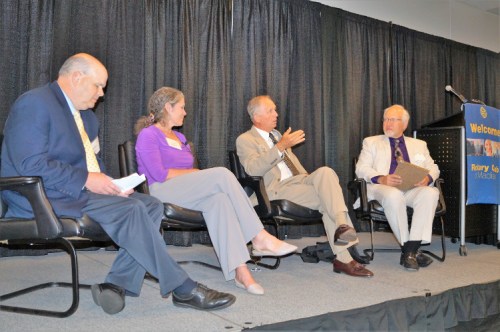
TIF Panel 6 22 2016

[Pictured here from left: Mike Barry, Natalie Erdman, Dan Thompson and Steve Walters]

Few Wisconsin voters understand what tax incremental financing (TIF) is, but since its introduction in 1975, it has proved to be one of the most powerful and effective urban development tools in Wisconsin’s history.  On Wednesday members were privileged to hear a panel explain this poorly understood topic.  Speakers were: Dan Thompson, former executive director of the Wisconsin League of Municipalities;  Natalie Erdman, Director of the Madison Department of Planning, Community and Economic Development; and Mike Barry, Assistant Superintendent for Business Services for the Madison Metropolitan School District.  The panel was artfully moderated by Steve Walters, with WisconsinEye.

Thompson reminded the audience that by the 1970s the suburbanization of homes and factories left huge swatches of once valuable central city land vacant and blighted.  City leaders sought financial incentives to revitalize downtowns and closed-in neighborhoods.  This was why Governor Patrick Lucey encouraged the legislature to approve a TIF law for Wisconsin.

Erdman explained how the law works by using Tax Incremental District #36, known as the Capital East District.  She noted how this sprawling area along East Washington Avenue from Blair Street to the Yahara River, long known for its car dealerships, had great potential.  However, developers could not undertake projects there because squishy soil required expensive foundations and contamination from old factories had to be remediated.  When the City created TID 36 its real estate was assessed at $75 million.

To realize the district’s extraordinary potential, the City developed a comprehensive plan. Projects included expensive high-rise mixed use projects such as The Constellation and the Galaxie, the renovation of Breese Stevens Field, street improvements, and Central Park refinements.

By 2015 assessed values of land and improvements in TID 36 had soared to $132 million and many more large projects are about to break ground and are being planned.  This huge increase in real estate values caused an additional $1.5 million to flow into the city treasury every year.   Under tax incremental financing these increased taxes are used to pay back the City’s front-end development costs.

During the district’s life—typically about 13 years in Madison—taxes continue to get collected and distributed to all taxing jurisdictions, but at level of the district before redevelopment.  Then when the district is terminated, all taxing jurisdictions start getting the bonus taxes created by the increased values.

Barry explained how school districts and cities work together to enjoy the increases in real estate taxes generated by tax incremental districts.

“Thank God for tax incremental districts,” exclaimed Rotarian Bob Miller who is also mayor of the city of Monona.  “Without it we would be in a sorry state.”  Miller explained how his suburb was able to use TIF to do a $20 million upgrade to Monona Avenue.

Special appreciation goes to Carol Toussaint and Roth Judd for fomenting and producing this exceptionally informative program.

For more information on TIF visit this link: https://www.revenue.wi.gov/slf/tif.html

Our thanks to Michael Barry, Natalie Erdman and Dan Thompson for serving on this TIF panel with Steve Walters of WisconsinEye moderating.  We also thank Dave Mollenhoff for preparing this review article and WisconsinEye for videotaping.  CLICK to watch the video.